Rainbow’s AI model dispute shows why fashion shoots now need explicit AI likeness clauses
Business Insider reports that fashion retailer Rainbow warned freelance models that AI use would increase and later used AI systems to create synthetic models and lookalike campaign imagery. Models said their work slowed down while AI-generated figures resembling them appeared on Rainbow’s website, social channels, and newsletters. One model, Francheska Pujols, sued after images allegedly resembled her in poses and settings she had not approved.
Why visual creators should care
For photographers, models, stylists, agencies, and fashion brands, this is a direct warning about source-photo reuse and likeness control. A standard model release or image-alteration clause may not clearly answer whether a brand can generate new scenes, poses, body positions, or AI doppelgängers from a shoot.
Practical takeaway
Commercial shoot agreements should say whether AI-generated variants are allowed, whether model likeness may be reused beyond the original booking, whether source photos can be used as AI reference material, and whether new poses, settings, or campaign scenes require fresh approval.
What to watch next
Watch whether fashion and e-commerce brands begin adding explicit AI-replication language to model releases and whether agencies treat AI likeness reuse as a separate licensing category.
Sources
Disney’s AI-generated TV ad tool makes existing creative assets a new reuse-risk point
Business Insider reports that Disney is preparing to launch a beta version of an AI-generated TV ad tool in July. The tool is intended to help advertisers generate scripts, video, and music in one workflow and customize connected-TV ads using existing creative assets. Disney has framed the tool as useful for smaller advertisers that lack full video-production resources.
Why visual creators should care
For photographers, directors, designers, agencies, and commercial image-makers, AI ad generation changes what can happen to existing campaign assets after delivery. A still image, brand asset, product photo, or previous campaign visual may become input for a new AI-generated ad unless the agreement says otherwise.
Practical takeaway
Client contracts should define whether delivered images, motion assets, stills, or campaign materials can be used inside AI ad-generation tools, whether new variants require approval, and whether the original creator is paid or credited when existing assets are reused to make new ads.
What to watch next
Watch whether major ad platforms add clearer controls for uploaded creative assets, disclosure, brand-safety review, and ownership of AI-generated ad variants.
Sources
New York synthetic-performer law creates a disclosure checkpoint for AI-generated people in ads
AP reports that New York now requires advertisements using AI-generated people in place of actors to clearly label them as synthetic performers. The law applies to ads in any medium and penalties can apply when advertisers fail to provide conspicuous disclosure. The rule is aimed at transparency as synthetic performers become more common in social, digital, and commercial advertising.
Why visual creators should care
For agencies, e-commerce brands, photographers, fashion teams, and AI image creators, synthetic human imagery is now a compliance issue as well as a production choice. AI-generated lifestyle models, product models, or human figures in ads may require disclosure when campaigns reach New York consumers.
Practical takeaway
Client and agency agreements should assign responsibility for checking whether campaign visuals include synthetic performers, where disclosures must appear, who approves disclosure wording, and whether AI-generated human figures are allowed in the project at all.
What to watch next
Watch whether other U.S. states adopt similar rules and whether ad platforms add required disclosure fields for synthetic people in commercial imagery.
Sources
MiniMax copyright case keeps protected-character risk alive for AI image and video tools
Reuters reports that a U.S. federal judge rejected MiniMax’s attempt to dismiss a copyright lawsuit brought by Disney, Universal, and Warner Bros. Discovery. The studios allege that MiniMax’s Hailuo image-and-video AI system was trained on protected material and generated characters from franchises including Marvel and Star Wars without permission. The judge found the complaint plausibly alleged copyright infringement at this stage.
Why visual creators should care
For illustrators, designers, agencies, and AI image creators, the case reinforces the risk around prompts and outputs that resemble protected characters, franchises, logos, or branded visual worlds. Client requests for “something like this character” or “in the world of this film” can create legal exposure even when the final image is generated by software.
Practical takeaway
Creators should avoid generating protected characters, franchise-like visuals, or brand-adjacent campaign assets unless the relevant rights are licensed. Contracts should also say that clients cannot request or approve infringing AI-generated variants of third-party characters or visual worlds.
What to watch next
Watch for discovery, motions, or rulings that clarify whether liability is tied to training data, generated outputs, marketing examples, user prompts, or the platform’s own conduct.
Sources
Dutch court artist damages show AI alteration can create moral-rights and reputation risk
The Guardian reports that Dutch court artist Petra Urban received damages after a far-right political party used one of her courtroom sketches without permission and altered it with AI to make the subjects look more menacing. The altered image was used in a political social media video and later removed. Urban objected to the unauthorized use, political context, and AI distortion of her work.
Why visual creators should care
For illustrators, editorial artists, photographers, and agencies, the dispute shows that AI alteration is not only a copying issue. Changing the meaning, tone, neutrality, or public context of a visual work can create reputational and moral-rights problems, especially in editorial or political settings.
Practical takeaway
Creators should include terms restricting AI alteration, political reuse, misleading edits, reputationally harmful distortion, and unapproved derivative uses of commissioned or editorial work.
What to watch next
Watch whether more European creators use moral-rights arguments to challenge AI-altered images where the edit changes the meaning or public trust of the original work.
Sources
Amazon’s AI custom-merch tool moves prompt-generated design into print-on-demand workflows
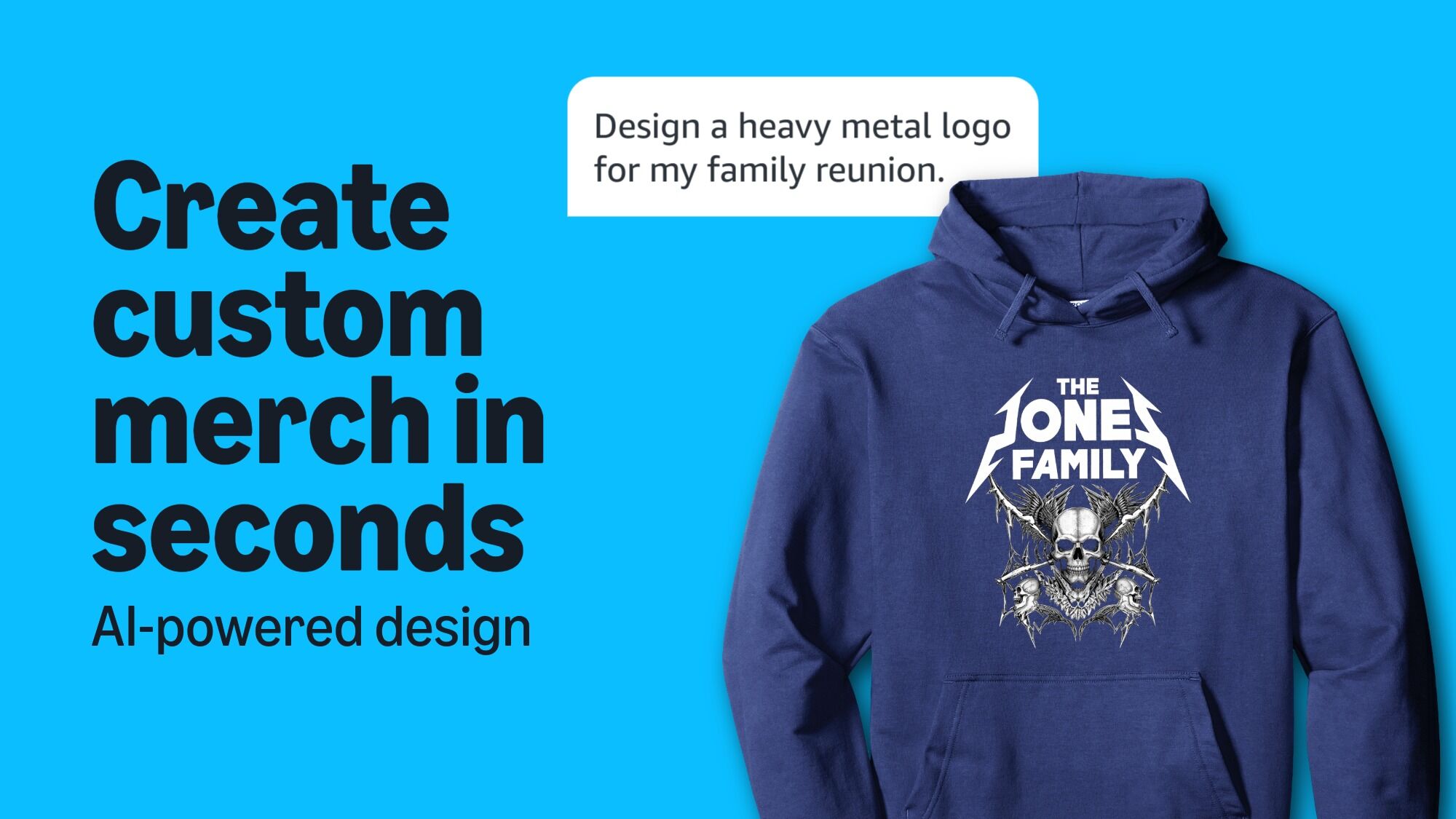
Amazon announced that customers can use Alexa for Shopping to generate custom designs from text prompts and print them on merchandise including T-shirts, sweatshirts, hoodies, tumblers, and water bottles. The feature runs through Merch on Demand, with Amazon handling production and delivery. This brings AI-generated visual design into a mainstream retail and print-on-demand workflow.
Why visual creators should care
For illustrators, designers, print-on-demand sellers, and small agencies, AI-generated merchandise raises practical questions around copyright, trademarks, style imitation, brand references, and whether prompt-made designs compete with independent creators and marketplace sellers.
Practical takeaway
Creators working on merchandise or brand graphics should define whether AI-generated designs are allowed, who checks for third-party IP, whether prompts and outputs are retained, and whether final assets are safe for resale, print-on-demand, or client campaigns.
What to watch next
Watch how Amazon enforces copyright, trademark, and third-party-content checks inside AI-generated merchandise workflows, especially where prompts refer to brands, sports teams, characters, artists, or protected visual styles.
Sources