TikTok expands AI ad creation with Symphony Agent and reference-based video tools
TikTok announced new Symphony Agent features for advertisers at Cannes Lions, including tools that help create TikTok ads through an AI-powered chat experience, sort through creator content, generate creator briefs, and support custom creator networks. TikTok also separately announced that Dreamina Seedance 2.0 is being integrated into TikTok Symphony, with a Reference to Video feature that lets advertisers prompt exact images and products at specific moments in AI-generated video.
Why visual creators should care
For agencies, creators, product photographers, social-video teams, and brand clients, this shows AI moving into both sides of the ad workflow: generating new creative and mining existing creator or brand content for future campaigns. The practical issue is whether creator videos, product images, past campaigns, and brand assets can be used as inputs for AI-generated ad variants.
Practical takeaway
Campaign agreements should say whether creator content, employee content, product images, brand assets, and previous campaign materials may be used inside platform AI tools. Teams should also record which assets were used as references, who approved generated variants, and whether creator permissions cover AI-assisted reuse.
What to watch next
Watch whether TikTok gives advertisers and creators clearer controls around AI-generated ad variants, custom creator networks, Image to Video, Reference to Video, content recommendations, and rights for reused creator assets.
Sources
Meta’s new Facebook AI tools put camera-roll and appearance edits into the social workflow
Meta announced new Facebook AI tools that include camera-roll sharing suggestions, collage cutout templates, AI-assisted video montages, and photo presets that can change clothing, hair, and accessories. Meta says camera-roll sharing suggestions are opt-in and can be turned off.
Why visual creators should care
For photographers, creators, influencers, agencies, and anyone delivering social-first visual work, platform-side AI editing is becoming normal. A photo may not stay as captured or delivered once it enters a social platform that can restyle clothing, change appearance, suggest edits, or transform personal images into shareable content.
Practical takeaway
For client work, especially portraits, influencer content, fashion, beauty, and personal-brand assets, agreements should address whether platform AI tools may alter appearance, clothing, background, accessories, or context after delivery. Creators should also keep original files and approval records so they can distinguish delivered work from later platform-side edits.
What to watch next
Watch how Meta labels AI-edited images, what controls users get over camera-roll suggestions, and whether brands or creators begin asking for restrictions on AI restyling after assets are published.
Sources
Google Merchant Center requires AI-generated product images to keep source metadata
Google’s Merchant Center product data specification says images created using generative AI must contain metadata indicating that they were AI-generated. The specification tells merchants not to remove embedded metadata tags such as IPTC DigitalSourceType and gives examples including TrainedAlgorithmicMedia, CompositeSynthetic, and AlgorithmicMedia.
Why visual creators should care
For ecommerce teams, product photographers, designers, marketplace sellers, and agencies, this turns AI-image metadata into a practical product-listing requirement. Product images are not just visual assets; they are feed assets that may need preserved provenance information to remain compliant with platform rules.
Practical takeaway
When using AI-generated or AI-assisted product imagery, keep exports with the required metadata intact. Production teams should document whether images were created with Product Studio or other generative tools, avoid stripping provenance tags during compression or handoff, and make sure clients understand that metadata removal can become a platform-compliance problem.
What to watch next
Watch whether other ecommerce and ad platforms adopt similar IPTC or C2PA-style metadata requirements for AI-generated product images, lifestyle scenes, additional images, and product videos.
Sources
Adobe Firefly Graph turns AI creative workflows into reusable production assets
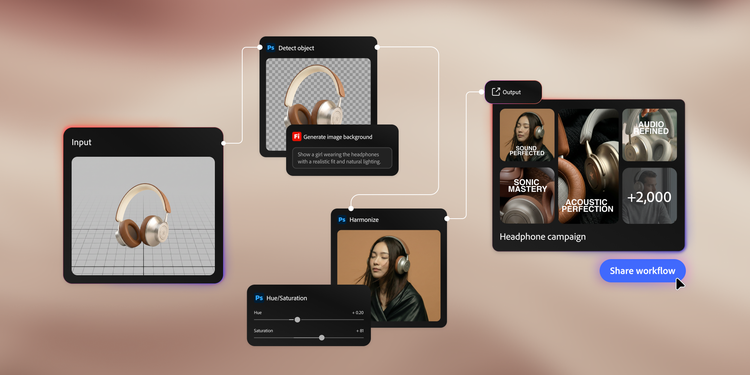
Adobe says Firefly Graph is now available for enterprises, giving creative teams a node-based way to build reusable AI-powered workflows. The system can combine model selection, creative actions, brand rules, approval logic, image and video generation, Photoshop-style finishing steps, content credentials, and governed reuse across teams.
Why visual creators should care
For agencies, in-house creative teams, designers, retouchers, photographers, and production managers, this is a shift from one-off prompting to repeatable AI production systems. The workflow itself becomes an asset, which means teams need to know who built it, what models it uses, what source assets it accepts, what approvals are baked in, and what records it creates.
Practical takeaway
Teams using reusable AI workflows should keep workflow documentation, model settings, brand rules, approval steps, source-file inputs, and output records. Client contracts should say whether custom AI workflows may reuse project materials for later campaigns and whether Content Credentials or similar records must be preserved.
What to watch next
Watch whether reusable creative workflows become part of agency deliverables, whether clients ask to own or restrict them, and whether model choice, indemnity, and content credentials become standard parts of AI-assisted production records.
Sources
Pinterest’s AI product-image tools show visual search becoming an ad-production layer
Business Insider reported that Pinterest wants advertisers to see the platform more like a search engine and highlighted its use of visual signals and generative AI tools. The report notes that Pinterest offers tools that can turn products into more stylized images for platform advertisements.
Why visual creators should care
For product photographers, ecommerce brands, agencies, and designers, this shows another visual platform turning product imagery into AI-generated ad variants. The same product photo may be restyled, staged, or adapted inside a platform where discovery, search, shopping, and advertising all sit together.
Practical takeaway
Product-image licenses and client scopes should say whether platform tools may restyle, re-stage, or generate new ad imagery from delivered product photos. Agencies should also keep records of the original approved product images and any AI-generated variants used for platform campaigns.
What to watch next
Watch whether Pinterest and similar visual-commerce platforms give brands clearer controls over AI-stylized product ads, product accuracy, and whether generated campaign variants must be reviewed before publication.
Sources
Fake AI family posts show how ordinary social photos can become likeness material
PetaPixel reported on a Singapore man whose social media photos were allegedly used to create AI-generated posts showing a fake family life. The report says real photos of the man and images from his sister’s profile were used to create posts implying a relationship and children that did not exist.
Why visual creators should care
For photographers, portrait clients, influencers, families, agencies, and anyone publishing personal images online, this shows how ordinary social photos can become source material for fabricated visual narratives. The issue is not only copyright; it is likeness, consent, privacy, reputation, and the emotional harm caused by believable synthetic images.
Practical takeaway
Creators and clients should treat identifiable personal images as potential AI source material once they are online. For sensitive portrait, family, influencer, and personal-brand work, keep originals, publication records, takedown screenshots, URLs, and evidence showing when an AI-generated misuse appeared.
What to watch next
Watch whether platforms create easier reporting paths for AI-generated personal-image misuse, especially where someone’s face or family members are used to fabricate relationships, endorsements, children, or private events.
Sources