Getty scraps Shutterstock merger after UK competition condition
Getty Images has scrapped its proposed $3.7 billion merger with Shutterstock after the UK Competition and Markets Authority required Getty to sell Shutterstock’s editorial business as a condition of approval. Reuters reported that Getty had until July 6 to accept the proposed remedy, but will instead terminate the deal.
Why visual creators should care
For photographers, videographers, stock contributors, publishers, and agencies, this is a material update to one of the biggest stock-library consolidation stories of the year. The merger was framed partly around building scale for the AI era, so its collapse keeps Getty and Shutterstock as separate licensing systems with separate contributor terms, editorial libraries, and AI strategy pressures.
Practical takeaway
Stock contributors should continue tracking which platform terms apply to their work, especially around AI licensing, editorial restrictions, contributor compensation, archive access, and any future attempts at consolidation or licensing partnerships.
What to watch next
Watch whether Getty or Shutterstock pursue different AI licensing, editorial archive, contributor-payment, or partnership strategies now that the merger route has collapsed.
Sources
Google expands Gemini image generation using personal Google Photos
Google says eligible users in the United States can now use Gemini’s personalised image-generation features for free. The feature connects Gemini’s Personal Intelligence with Nano Banana and Google Photos, allowing Gemini to pull from a user’s own photo library when generating images, if the user gives permission.
Why visual creators should care
For photographers, portrait clients, families, influencers, creators, and agencies, this shows personal photo libraries becoming direct inputs for AI image generation. That creates useful creative possibilities, but also raises questions about consent, family images, face groups, source-photo control, private libraries, and whether people shown in those photos agreed to be used as AI image references.
Practical takeaway
For personal-brand, portrait, family, influencer, or client work, treat photo-library uploads and AI-personalised generation as a separate permission issue. Keep originals, client approvals, source files, and records of which images were uploaded or connected to a platform feature.
What to watch next
Watch whether Google expands the feature beyond the United States, adds clearer consent controls for other people shown in a user’s library, or gives creators stronger records showing which photos were used as AI references.
Sources
California AI listing-photo rules put virtual staging on notice
California real-estate regulators have warned licensees that AI-enhanced imagery and listing descriptions must remain truthful, reviewed, and compliant with disclosure rules. From January 1, 2026, California law requires clear disclosure when digitally modified listing images change a property’s appearance, including AI-generated or AI-enhanced changes, and requires an unaltered original image to be available.
Why visual creators should care
For real-estate photographers, retouchers, virtual-staging teams, property marketers, agents, and agencies, AI listing images are becoming a regulated disclosure issue. AI virtual staging can make spaces look cleaner, brighter, furnished, renovated, or more desirable than they are, which creates risk if buyers or renters are misled.
Practical takeaway
Real-estate image agreements should say whether AI staging, cleanup, enhancement, sky replacement, object removal, room furnishing, or renovation simulation is allowed. Teams should preserve the original unaltered images, mark modified images clearly where required, and keep client approvals for every AI-altered listing visual.
What to watch next
Watch whether more states or property platforms require clear AI-image disclosures, original-photo access, and limits on virtual staging that changes the apparent condition of a property.
Sources
Washington Post photo contest bans AI images but takes broad usage rights
The Washington Post opened submissions for its 2026 travel photo contest and says heavily manipulated or AI-generated images will not be accepted. The rules also say entrants must own and have taken the submitted photo, while granting the Post broad permission to use submitted images in perpetuity in any medium.
Why visual creators should care
For photographers, this is a useful reminder that contest rules now often combine AI authenticity requirements with broad usage permissions. A contest may reject AI-generated or heavily manipulated images while still asking entrants to give the publisher wide rights to reuse submitted photographs.
Practical takeaway
Before entering a photography contest, read both the AI rules and the licence grant. Preserve RAW files and edit histories in case authenticity is questioned, and check whether the organiser receives rights only for contest promotion or a much broader permission to use the image later.
What to watch next
Watch whether more contests require explicit AI-use declarations, RAW-file verification, edit histories, provenance records, or narrower usage grants that distinguish contest display from wider commercial reuse.
Sources
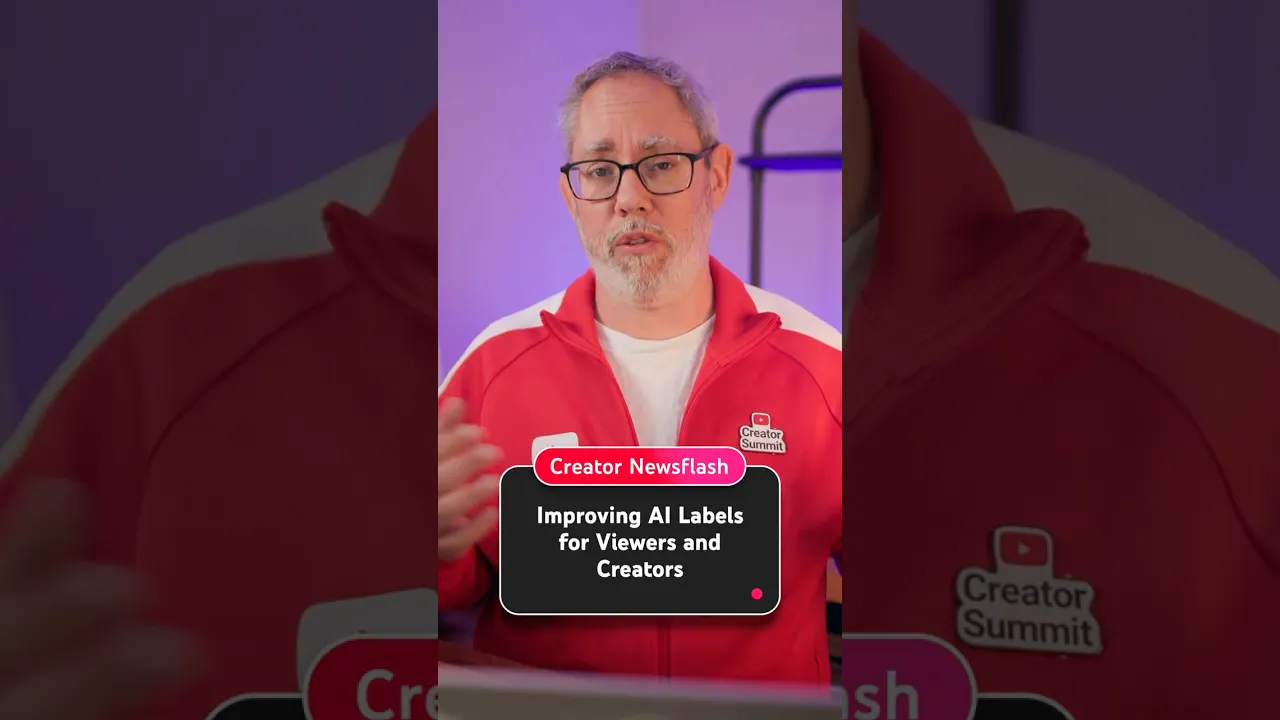
YouTube makes AI labels more visible and applies some automatically
YouTube says it is moving labels for realistic AI-altered or AI-generated content to more prominent places on videos and Shorts. The platform also says it may automatically apply labels when its systems detect significant photorealistic AI, and that labels already apply permanently to content created with some YouTube AI tools or supported C2PA metadata.
Why visual creators should care
For creators, agencies, editors, video producers, and brands, AI disclosure is becoming a platform-level workflow rather than only a voluntary caption choice. If a platform can detect and label AI-altered photorealistic content, teams need to understand when labels appear, how they affect audience trust, and whether client approvals covered AI use before publication.
Practical takeaway
For video and social campaigns, record whether AI-generated or AI-altered people, places, products, events, or scenes appear in the final content. Client approvals should address platform labels, disclosure duties, and whether AI-altered versions can be published under the creator’s or brand’s account.
What to watch next
Watch whether YouTube expands automatic AI labels, gives creators more appeal tools, or aligns more closely with C2PA and other provenance systems for generated or heavily altered visual content.
Sources
Midjourney terms highlight public remix and third-party rights responsibility
Midjourney’s current terms say users are responsible for their inputs and outputs, must avoid violating third-party intellectual-property and privacy rights, and must have rights and permissions for content used in image or video tools. The terms also say outputs are public and remixable by default unless users use stealth features, and that users grant Midjourney a broad licence to content and generated assets.
Why visual creators should care
For AI image creators, designers, agencies, illustrators, and client teams, these terms are a practical reminder that commercial use does not erase platform conditions. Public visibility, remixability, uploaded source images, likeness permissions, subscription level, third-party rights, and platform licences can all affect whether an output is safe for client work.
Practical takeaway
Before using Midjourney outputs commercially, save the terms version, subscription level, prompts, source uploads, final outputs, and any client or model permissions. For confidential client work, check privacy and stealth settings before upload, not after the image has been generated.
What to watch next
Watch whether Midjourney updates its commercial-use, remix, privacy, image-editor, or video-model terms as litigation and platform competition continue to pressure generative-image services.
Sources