Indonesia’s copyright rewrite would protect AI-assisted work but exclude fully generated output
Indonesia is preparing a major copyright-law revision that would explicitly address artificial intelligence. The draft reviewed by Reuters would allow copyright protection for AI-assisted work when sufficient human involvement exists, while excluding work generated entirely by AI. It would also require disclosure of AI use and prohibit generated imitation of a creator’s distinctive style.
Why visual creators should care
The proposal combines several issues usually handled separately: authorship, training, disclosure, style imitation and platform compensation. It expressly covers photography and film, making it directly relevant to professional image makers rather than only writers or software developers.
Practical takeaway
Creators working in or licensing into Indonesia should document the human decisions behind AI-assisted work, including selection, composition, editing and arrangement. Preserve prompts and intermediate files, but do not rely on prompts alone as evidence of authorship.
What to watch next
Watch the threshold Indonesia adopts for sufficient human involvement, how distinctive style is defined, whether photography training requires licences and how collective compensation would reach individual visual creators.
Sources
App stores face direct pressure to stop distributing AI nudification tools
San Francisco City Attorney David Chiu has sent cease-and-desist letters demanding that Apple and Google remove 13 apps allegedly used to generate non-consensual synthetic nude images. The city also wants the companies to stop processing payments for the developers and conduct more regular reviews of comparable tools.
Why visual creators should care
The action moves responsibility upstream. Rather than concentrating only on the person who generates or shares an abusive image, it asks whether app stores and payment processors are facilitating and profiting from tools designed or readily used to violate image and likeness rights.
Practical takeaway
Studios and representatives responding to synthetic abuse should record not only the generated image and uploader but also the app, developer, store listing and payment route involved. Those records may support reports to several intermediaries at once.
What to watch next
Watch whether Apple and Google remove the named apps, whether San Francisco files suit and whether app stores introduce technical safety reviews for face-swap and clothing-removal tools rather than relying on their marketing descriptions.
Sources
Google Image Search is becoming a place where new images are generated
Google is adding image generation to AI Overviews using its Nano Banana 2 Lite image model. Users will be able to ask Search to visualise an idea and receive generated imagery alongside real examples. Google Images is also gaining a personalised, continuously updated gallery for signed-in desktop users in the United States.
Why visual creators should care
Image search traditionally helped users locate photographs, illustrations and the websites publishing them. Generating a new visual inside the search result creates a competing route that may reduce referrals to licensed images, stock libraries, publishers and creator portfolios.
Practical takeaway
Photographers and illustrators should monitor whether search referrals and licensing enquiries change after the rollout. Keep visible ownership and licensing information on indexed pages, and record examples where a generated Search image appears to reproduce protected elements or brand assets.
What to watch next
Watch how generated images are labelled, whether source references are shown, what safeguards apply to trademarks and living artists, and whether creators can prevent indexed visual material from being used as generation context.
Sources
Google’s AI image editor is moving into everyday office production
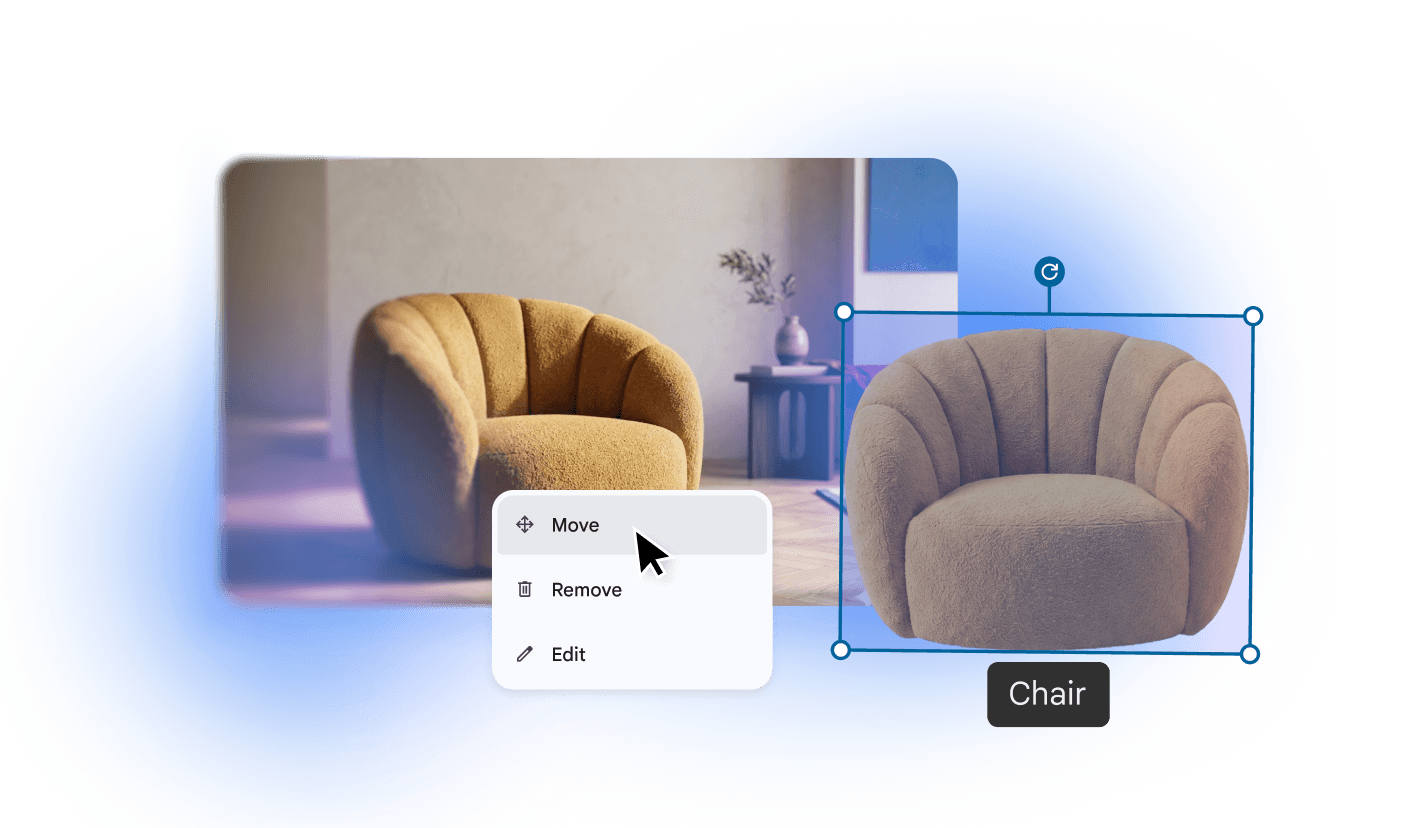
Google plans to roll out its Pics image editor across eligible Workspace business and education accounts from August 18. The editor can generate images, isolate and replace elements, alter backgrounds, edit text and correct common synthetic-image defects from inside Google’s productivity environment.
Why visual creators should care
Visual generation is becoming available to teams that may not have established photography, design or rights-review processes. Marketing, sales, education and administrative staff will be able to alter supplied imagery without leaving the software already used to build documents and presentations.
Practical takeaway
Organisations should decide whether Pics is enabled by default, which employees may generate or alter client assets and when professional review is required. Original licensed images should be retained separately from AI-edited derivatives.
What to watch next
Watch Google’s administrator controls, provenance and labelling support, commercial-use terms and whether edited exports preserve a record of the generated changes.
Sources
A public registry lets people state how AI may use their identity
RSL Media’s Human Consent Registry allows individuals to publish machine-readable permissions concerning the use of their name, image, likeness, voice, movement, characters and other identity attributes by AI systems. The registry is free and is intended to make consent discoverable rather than leaving it buried in individual contracts.
Why visual creators should care
Most likeness permissions are private documents that an AI crawler or generation service cannot inspect. A public, structured declaration could help shift consent away from assumptions based on online availability and towards an affirmative record controlled by the person represented.
Practical takeaway
The registry can supplement, but should not replace, a project-specific model or performer agreement. Productions still need written permission covering the particular tool, project, territory, duration, commercial use and future derivatives.
What to watch next
Watch whether major model providers recognise the declarations, whether identity verification proves reliable and whether conflicting project contracts take priority over a person’s general public preference.
Sources
AI-image detectors are being tested against the edits images actually undergo
The NTIRE 2026 challenge evaluated AI-image detection systems using 294,500 real and generated images from 42 generators. The test set included 36 transformations such as cropping, resizing, compression and blur, reflecting the conditions under which images circulate online rather than testing only pristine generator outputs.
Why visual creators should care
A detector that works on untouched source files may fail after routine editorial and platform processing. The challenge reinforces the need to evaluate detection tools against screenshots, social-media exports, thumbnails and edited campaign assets before relying on them professionally.
Practical takeaway
Ask detector vendors for performance results on transformed files and unfamiliar generators. A single confidence score should not determine whether a photographer is accused of using AI or whether an image is rejected from publication.
What to watch next
Watch whether leading systems retain their performance on new generators released after the benchmark and whether platforms publish transformation-specific error rates rather than a single headline accuracy figure.
Sources