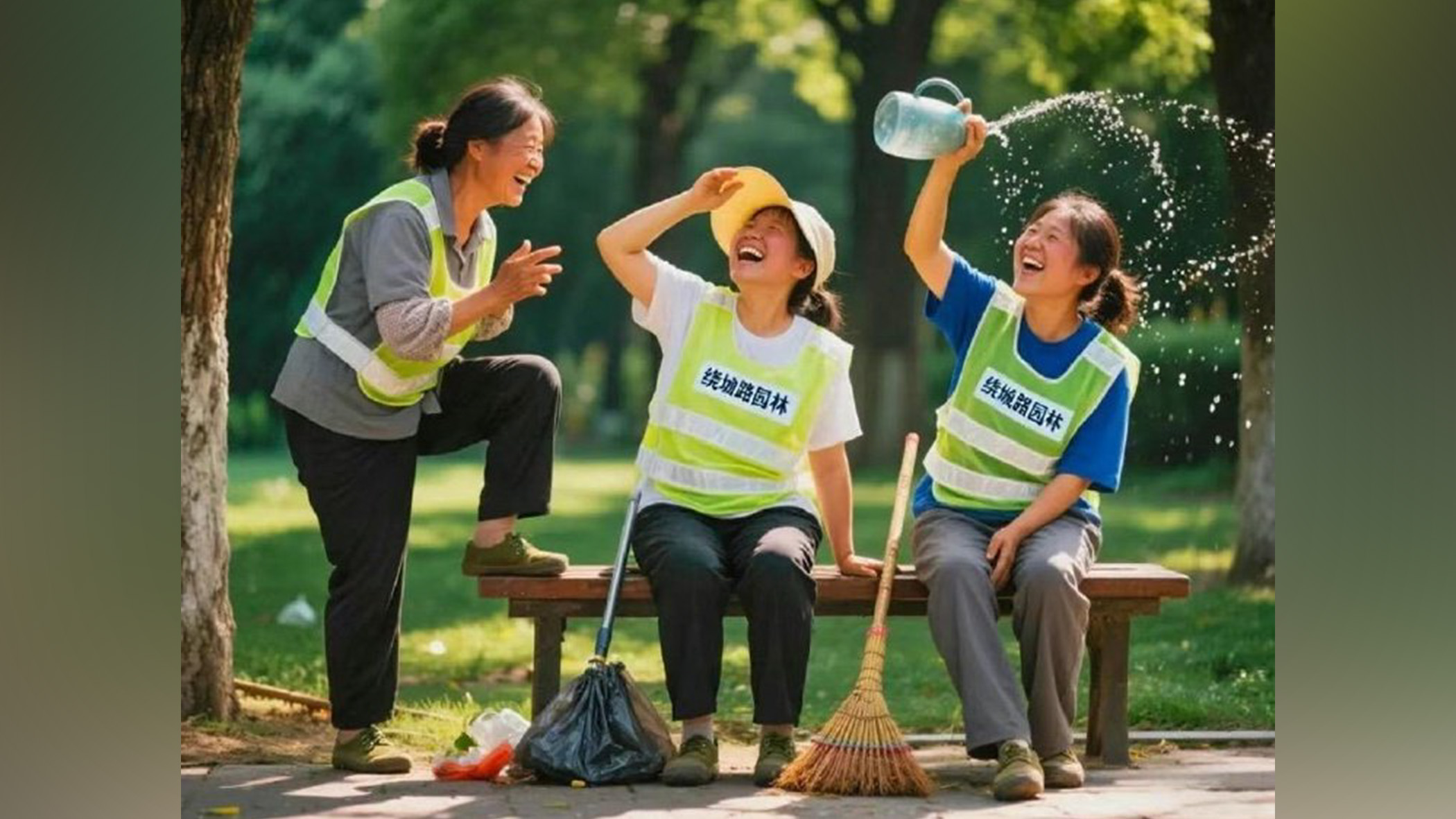
A photography competition awarded first prize to an AI-generated image
An image depicting three sanitation workers was awarded first prize in the July edition of the Hohhot Mass Photography Bi-monthly Competition in China. Following public criticism, the organisers investigated and confirmed that the image had been generated with AI. It was disqualified on July 14, and a separate ongoing photography competition was suspended.
Why visual creators should care
The failure was not caused by a sophisticated forgery defeating an advanced forensic process. The organisers acknowledged weak vetting and unclear evaluation standards. That exposes a wider problem: many photography competitions prohibit generated imagery without defining what evidence entrants must supply or how disputed work will be reviewed.
Practical takeaway
Competition organisers should require a clear capture declaration, retain the right to request camera originals and publish an appeal procedure. Photographers should preserve raw files, metadata, edit histories and the competition rules that applied on the submission date.
What to watch next
Watch whether the organisers publish new verification standards, whether entrants must provide camera originals and whether other competitions begin reviewing shortlisted work before announcing winners.
Sources
Platforms are beginning to distinguish original AI-assisted work from synthetic spam
YouTube, TikTok, Pinterest, Substack and Meta are refining their approaches to mass-produced AI content. YouTube has clarified that repetitive, low-effort or manipulative AI videos may lose monetisation, while original storytelling that uses AI remains eligible. TikTok is testing stronger detection of accounts dedicated to AI spam, Pinterest lets users reduce generated material in their feeds, and Substack has introduced optional AI-use estimates and creator disclosures.
Why visual creators should care
The shift creates a new distribution boundary for photographers, filmmakers and illustrators. Platforms are no longer deciding only whether AI content is allowed. They are beginning to judge whether it is original, useful and meaningfully directed by a creator.
Practical takeaway
Creators using AI should retain enough production evidence to demonstrate original direction and contribution. Record source assets, scripts, edits, generated components and final human decisions rather than relying on a general statement that AI was used.
What to watch next
Watch how platforms define repetitive or inauthentic visual content, whether demonetised creators receive meaningful appeals and whether AI disclosures affect reach independently of quality.
Sources
A major director’s fully generated short raises unresolved actor and production questions
Director Neill Blomkamp has released Nightbourne, a 14-minute film produced using ByteDance’s Seedance 2.0. Reporting describes the short as entirely AI-generated and featuring 32 synthetic characters based on real actors. Blomkamp has also established Barley Studios and says he intends to produce a feature-length AI film.
Why visual creators should care
The project moves fully generated filmmaking from anonymous experiments into the work of an established commercial director. Synthetic characters based on real actors create immediate questions about consent, reference photography, performance rights, credits and whether a generated person can be reused across later productions.
Practical takeaway
AI film productions should keep a character register identifying every real-person reference, source image, voice reference, permission and generated derivative. A general performer release should not be treated as permission to construct or reuse a digital character.
What to watch next
Watch whether the actors referenced in the film are identified, whether the production publishes consent and credit information, and whether distributors or unions demand source and likeness documentation for the planned feature.
Sources
Adobe Stock now lets buyers alter an asset before they license it
Adobe Stock is promoting AI Studio as a system for searching its catalogue and changing stock images or video before licensing and downloading the result. Available functions include changing colours and moods, replacing backgrounds, modifying aspect ratios, animating still images and editing through written instructions.
Why visual creators should care
Traditional stock licensing begins with the buyer selecting an existing asset and then modifying the licensed copy. Adobe’s new workflow allows transformation to become part of the selection process itself. That raises practical questions about what exactly is licensed, which contributor’s work remains identifiable and how generated alterations affect model, property and usage restrictions.
Practical takeaway
Buyers should save the original asset identifier, the unmodified preview, the AI-edit instructions and the final licensed output. Confirm whether releases and usage restrictions attached to the source asset continue to apply after people, backgrounds or contexts are changed.
What to watch next
Watch how Adobe identifies the source contributor after extensive alteration, whether generated derivatives receive Content Credentials and how contributor compensation is calculated when the licensed result differs materially from the original asset.
Sources
Germany’s highest civil court will examine the downloading step behind AI datasets
Germany’s Federal Court of Justice is scheduled to hear case I ZR 281/25 on September 3. The dispute concerns a photographer’s preview image downloaded from a stock agency website while a research organisation was filtering image-text pairs for a dataset that could be used to train generative AI. Lower courts held that the download was permitted under German text-and-data-mining rules.
Why visual creators should care
The case focuses on an operational step that can disappear inside abstract debates about training. The image was downloaded, analysed and omitted from the final dataset, but the temporary copy still involved the photographer’s reproduction right. The court will also examine whether a natural-language prohibition on automated access was an effective rights reservation.
Practical takeaway
Photographers and image libraries should not rely only on written website terms to reserve AI-training rights. Use machine-readable reservations where available and preserve evidence showing when those signals were active.
What to watch next
Watch whether the court distinguishes dataset preparation from model training, how it interprets scientific-research exceptions and what it says about the required form of a machine-readable opt-out.
Sources
A proposed AI licensing market warns that original creators can be penalised for being distinctive
New economic research argues that both unrestricted training and conventional strong-rights models can fail to support creative production. The authors describe an originality penalty in which highly distinctive creators may receive insufficient compensation even though their work contributes disproportionate value to AI systems. They propose a data intermediary that would collect and distribute training payments while supporting innovative work.
Why visual creators should care
Visual-licensing debates often assume that a simple payment for each file will solve the training problem. The research suggests that abundant, generic content and highly original work may require different treatment if the market is expected to preserve incentives for photographers, illustrators and other creators.
Practical takeaway
Creator groups negotiating collective AI licences should consider how payments reflect originality, professional investment and market substitution rather than allocating revenue only by file count or dataset frequency.
What to watch next
Watch whether visual collecting societies, stock agencies or rights registries test collective licensing models that reward distinctive contribution and whether AI companies accept independent intermediaries.
Sources