A photography library is arguing that AI generation now competes directly with the photographs used to build it
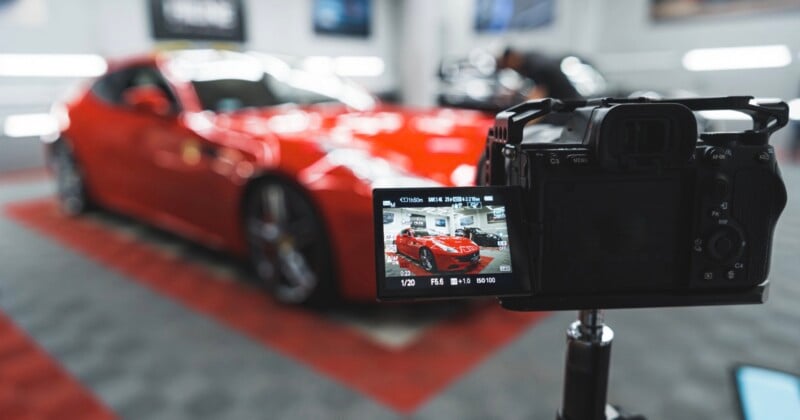
Automotive photography company EVOX Productions has sued Midjourney in federal court in California. EVOX alleges that Midjourney copied tens of thousands of copyrighted vehicle photographs without permission to train its image generator and removed copyright information including watermarks, credits and metadata. EVOX says it has photographed nearly every commercially available make and model sold in the United States since 2000 and licenses those images to dealerships and vehicle marketplaces.
Why visual creators should care
This is unusually close to the everyday commercial-photography market. EVOX is not only arguing that its photographs were copied into a model; it says the resulting generator allows customers to produce substitute car imagery rather than licensing the professional photographs on which the system allegedly learned.
Practical takeaway
Commercial photographers with systematic libraries should preserve registrations, original files, metadata, watermarked versions, publication dates and licensing history. When investigating possible training use, document not only similarity between outputs and individual photographs but whether the generator competes with the market the library was created to serve.
What to watch next
Watch whether the court allows claims based on alleged removal of copyright-management information to proceed separately from the broader training dispute, and what evidence EVOX produces connecting its library to Midjourney’s datasets.
Sources
A performer can now approve the performance without ever performing it
Fresh reporting on Higgsfield’s feature-length AI film The Cully Hill Boys describes a production starring recognisable talent whose likeness and voice rights were cleared even though the performers did not physically film the scenes. Forbes reports that the film required 473,214 generations. The larger production model allows creators or performers to approve synthetic versions of themselves rather than recording each performance conventionally.
Why visual creators should care
The distinction between likeness permission and performance is changing. A creator may supply the identity, voice and brand while a production team supplies the script, gesture, environment and generated performance. That can turn the creator’s identity itself into a licensable production asset.
Practical takeaway
Agreements for digital doubles should say who may write the words, generate the performance, approve the final result, reuse the avatar and create future versions. A broad permission to use somebody’s image should not automatically be treated as permission to make them appear to perform actions or deliver statements they never physically made.
What to watch next
Watch whether creator-management agreements begin pricing synthetic performances separately from shoot days and whether platforms require audiences to be told when the real creator approved the message but never actually recorded the performance.
Sources
Getty is making permissioned training part of the product it sells to visual buyers
Getty Images’ August 10 second-quarter results again describe its generative-AI tools as trained on permissioned content and sold with indemnification and perpetual worldwide usage rights. Getty and iStock customers can use text-to-image generation as part of the company’s broader commercial visual offering.
Why visual creators should care
Getty is positioning the provenance of the training material and the legal protection attached to the output as commercial features. That creates a useful comparison point for agencies choosing between generators: model capability is only one part of the procurement decision.
Practical takeaway
When comparing generators for a client, include training-source policy, indemnification and output licence alongside price and image quality. Record exactly what the indemnity covers and whether client-specific uploads or reference images receive the same protection.
What to watch next
Watch whether buyers begin demanding permissioned training or indemnification in procurement documents and whether other image platforms respond with equivalent guarantees.
Sources
CapCut is turning generated video into an ordinary desktop post-production job
CapCut has brought Seedance 2.5 into its PC workflow with three connected functions: AI Video for generating shots, AI Edit for modifying footage and AI Extend for lengthening clips. CapCut explicitly pitches the workflow at advertising, client revisions, content batching, real-estate video, creator production and multi-version exports.
Why visual creators should care
Generated footage no longer needs to arrive as a separate asset from a specialist AI tool. It can be created, altered, extended and exported inside the same timeline as recorded footage. That makes it easier for the distinction between captured and generated material to disappear during ordinary production.
Practical takeaway
For client projects, mark generated and recorded shots separately in the edit record. Keep the source clip, generated version and final export, and document when AI Extend or AI Edit materially changes events, environments, products or people shown in the footage.
What to watch next
Watch whether CapCut provides durable per-clip model and generation histories and whether provenance survives through its normal timeline, export and social-publishing workflow.
Sources
A photography gallery is being forced to explain what makes generated imagery photographic
Belfast Exposed has faced criticism for exhibiting Johnny Sheridan’s AI-generated project Galatea. Sheridan and the gallery have defended the inclusion, arguing that the work involved substantial prompting, iteration and artistic direction rather than a single automated generation. The dispute has become a practical institutional argument about whether photographic exhibitions should be defined by camera capture, visual language, artistic intention or some combination of the three.
Why visual creators should care
The issue is broader than whether generated imagery can be creative. Photography galleries, competitions, grants and clients increasingly need a workable definition of what they mean by photography when a project may contain photographs, generated imagery and AI-assisted manipulation.
Practical takeaway
Institutions accepting AI-assisted work should define categories before submissions open. Creators should describe process precisely: what was photographed, what was generated, what was manually edited and what role the human author played.
What to watch next
Watch whether photographic institutions move towards explicit lens-based requirements, separate synthetic categories or disclosure-based acceptance rather than leaving the definition implicit.
Sources
Generating a stock image does not necessarily mean the person who prompted it owns the copyright
Shutterstock’s current guidance says users of its AI image generator do not receive individual copyright ownership of the generated image. Instead, the user licenses the output under Shutterstock’s licensing system. Shutterstock also says generated images are added to its library, meaning other customers may be able to find and license the same generated image.
Why visual creators should care
A designer or agency can easily assume that generating a bespoke-looking image gives the client exclusive ownership. Under this model, the commercial right is a licence and the same output may be available to somebody else. That is a very different proposition for brand campaigns requiring exclusivity.
Practical takeaway
Before promising a client exclusive AI artwork, check whether the tool actually grants copyright or exclusivity. Save the licence attached to the generated asset and tell the client when another customer may legally license the same image.
What to watch next
Watch whether Shutterstock introduces exclusive generated assets or clearer mechanisms showing buyers that a generated image may also be available elsewhere in its catalogue.
Sources