The Philippines says putting a real person into an AI image is a data-protection question
The Philippines National Privacy Commission has issued guidance stating that a person’s face and likeness are personal information and that photographs or video can in some circumstances constitute biometric information. Using AI to create an image or video from a real person’s likeness and then posting or sharing it amounts to processing personal data. That processing must have a legitimate purpose and a lawful basis under the country’s Data Privacy Act. The Commission says synthetic media created without a lawful basis may amount to unauthorised processing, while fabricated depictions of someone doing, saying or appearing somewhere they never did are false personal data.
Why visual creators should care
This places synthetic likenesses inside an existing privacy framework rather than treating them solely as copyright or deepfake problems. For photographers and agencies, permission to possess or publish a portrait may therefore be different from permission to use the person’s face as input for a synthetic image or video.
Practical takeaway
When an identifiable person will be used as generative input, record the legal or contractual basis for that use separately from the original photography permission. If a likeness is misused, preserve the source photograph, generated media, publication URL and timestamps: the Commission says data subjects may seek blocking, removal or destruction where substantial proof shows that the personal data is false.
What to watch next
Watch how the Commission applies the guidance to advertising, commercial parody, influencer content and work involving public figures, and whether other privacy regulators adopt a similar personal-data approach to synthetic likenesses.
Sources
Claude is moving provenance from policy language into the files it produces
Anthropic has published new implementation details for machine-readable marking under the EU AI Act transparency framework. Claude models launched in the EU on or after August 2 are intended to support marking from launch, and Anthropic says the system applies globally where supported. Generated text receives embedded watermarks, while supported files including SVG, PNG and JPG can carry digitally signed provenance metadata based on the C2PA standard. Anthropic is also working to extend marking to older models.
Why visual creators should care
This is a significant step towards provider-level provenance rather than relying on a platform to inspect an image afterwards and guess whether AI was involved. It also shows the limits of those signals: Anthropic itself warns that a Claude mark indicates processing by Claude rather than proving complete authorship or provenance.
Practical takeaway
Preserve the original marked file when Claude forms part of an image or design workflow. Re-saving, format conversion and screenshots can strip provenance metadata. Record what Claude actually did to the asset because the presence of a mark may show that Claude processed a file without establishing that Claude created the underlying visual material.
What to watch next
Watch for Anthropic’s promised detection tools, wider marking support on existing models and whether downstream design, publishing and social platforms preserve Claude’s C2PA records.
Sources
Apple may be building its own way to prove an iPhone photograph began in a camera
Code and privacy disclosures found in the iOS 27 beta reportedly describe an Apple Reference Image system for authenticating photographs captured on an iPhone. The feature is not currently live and is reportedly off by default. Under the described system, photographs made in a special Reference mode would carry capture provenance, and a user could later request verification using sensor signatures, capture timing and hardware identifiers through Apple’s Private Cloud Compute infrastructure.
Why visual creators should care
Most AI-image detection tries to inspect a finished picture and decide what it probably is. Camera-side authentication reverses that logic: evidence is created when the photograph is captured. For documentary, editorial and commercial photographers, that can be far more useful than a detector score produced after the fact.
Practical takeaway
Do not treat Apple Reference Image as an available production feature yet. If it ships, assess what information travels with the file, whether authentication survives editing and export, and whether clients can independently verify the result. Existing professional provenance workflows should continue to rely on currently supported capture and file records.
What to watch next
Watch whether Apple officially announces the feature, whether it interoperates with C2PA or remains proprietary, and whether authenticated photographs can preserve their proof through Lightroom, Photoshop, messaging and social-media workflows.
Sources
The software behind Content Credentials needs its own chain of trust
Adobe has issued security updates for its Content Credentials Rust SDK, C2PA command-line tool and JavaScript SDK. The August 11 bulletin addresses critical and important vulnerabilities that could cause denial of service, arbitrary file-system writes or reads, privilege escalation and security-feature bypass. Adobe says it is not aware of any of the vulnerabilities being exploited in the wild and recommends updating to c2pa-v0.90.6, c2patool-v0.27.6 and @contentauth/c2pa-web@0.12.1.
Why visual creators should care
Provenance only works if the software creating and verifying the provenance record can itself be trusted. As C2PA moves into cameras, publishing systems and client workflows, the security of the supporting SDKs becomes part of the authenticity infrastructure.
Practical takeaway
Studios, agencies and developers running their own Content Credentials or C2PA tooling should check deployed versions and update affected components. Creators using ordinary Adobe applications do not need to infer that their existing credentials are invalid; this bulletin concerns the underlying SDK and tooling rather than evidence that Content Credentials have broadly been compromised.
What to watch next
Watch for downstream services that bundle older versions of the affected libraries and for further guidance on whether any existing provenance-verification workflows need additional validation.
Sources
A $1 million AI film contest makes generation history part of eligibility
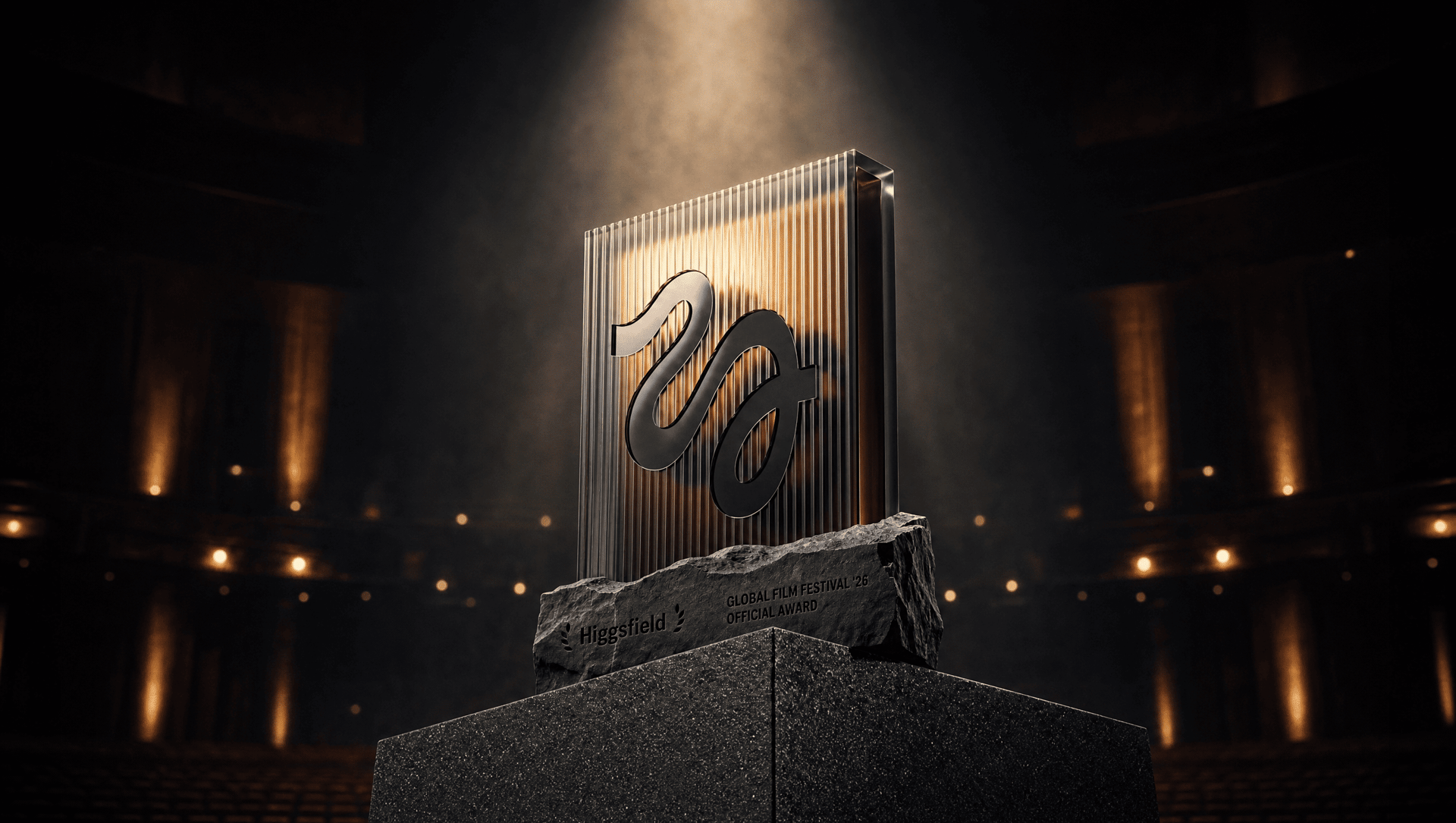
Higgsfield has opened a $1 million short-film competition in which every eligible film must be generated within its platform. Entries are screened for generation history as well as format and completeness. Real people’s faces and voices cannot be used as inputs, including the entrant’s own, while music, voice and sound design must also be AI-generated and the creator must hold the necessary rights. The submitted film must retain Higgsfield’s watermark and packshot and also be published publicly on a supported social platform.
Why visual creators should care
Competitions are beginning to use the production record itself as evidence. Rather than accepting a finished AI film and relying only on disclosure, Higgsfield can inspect whether the work was actually generated inside the required environment and whether the entrant followed source and likeness restrictions.
Practical takeaway
For AI competitions and commissions, keep the complete generation project rather than just prompts and final exports. Eligibility may increasingly depend on generation history, source assets and platform records. Also note that rights in AI-generated voice or music still need to be checked even where a competition requires those elements to be synthetic.
What to watch next
Watch whether mainstream film, photography and design competitions adopt similar audit requirements and whether generation histories begin functioning as an AI equivalent of RAW files or edit timelines.
Sources
For stock contributors, the AI licensing market now reaches beyond model training
Shutterstock says its AI data-licensing strategy increasingly covers both model training and inference. Fresh comments from the company’s data-licensing leadership describe agreements with companies including OpenAI and Meta and a growing hybrid market in which licensed visual data can support AI systems as well as conventional stock use. Shutterstock’s contributor documentation says eligible photos, illustrations, vectors, video, 3D material and music can enter datasets used for AI and computer-vision development, while contributors can opt out of future dataset licensing.
Why visual creators should care
Stock photography is no longer being licensed only as finished visual content. The same underlying library can have a second commercial life as model-development data. That changes how contributors need to think about the value and permitted use of large portfolios.
Practical takeaway
Shutterstock contributors should review their current image and video data-licensing settings rather than assuming marketplace submission and model-training permission are identical. Shutterstock says contributors participating in data licensing receive a proportional share of dataset contract revenue and cites a 20% average corporate royalty rate for data-licensing revenue.
What to watch next
Watch how Shutterstock distinguishes training licences from inference use, whether contributor controls become more granular and how much visibility contributors receive into which assets are included in individual AI licensing agreements.
Sources