AI smart glasses are starting to meet the same restrictions as ordinary cameras
British cinema operators are introducing prohibitions or restrictions on camera-enabled smart glasses, including Meta's AI-powered eyewear, according to Reuters. The UK Cinema Association cited both privacy and film-piracy concerns. The move follows restrictions on Meta smart glasses in courts in England and Wales, where taking photographs and video is already tightly controlled.
Why visual creators should care
AI wearables blur the line between a device used for assistance and a camera that may be continuously available in spaces where photography is restricted. For filmmakers, photographers, agencies and clients, that creates confidentiality and rights problems long before generated content is involved.
Practical takeaway
Treat camera-enabled glasses as recording equipment on professional locations. Include them in closed-set, client-confidentiality and no-photography policies rather than assuming ordinary phone rules automatically cover wearable cameras.
What to watch next
Watch whether venues, studios, galleries and commercial productions adopt explicit smart-glasses policies and whether hardware makers introduce stronger location-aware recording controls.
Sources
The US government has stepped into xAI's fight over whether a state can ban a synthetic-image capability
The US Department of Justice has filed a statement of interest in xAI's challenge to Minnesota's AI nudification law. The department argues that Minnesota's measure goes further than existing federal restrictions and raises concerns about a patchwork of state AI rules. At the August 19 preliminary-injunction hearing, xAI argued for exceptions involving consent, artistic expression and parody, while Minnesota maintained that terms of service are insufficient if the technology still enables harmful image generation. The judge has taken the injunction request under advisement.
Why visual creators should care
The case asks whether regulation should target abusive images after publication or the generative capability that makes them possible. That distinction could affect image generators, editing tools and professional systems capable of altering identifiable people.
Practical takeaway
Do not treat a platform's technical ability to generate a synthetic alteration as permission to make or publish it. For identifiable people, keep consent for photography, ordinary retouching and synthetic transformation as separate permissions.
What to watch next
Watch the preliminary-injunction ruling and whether the court accepts Minnesota's technology-level restriction or requires narrower exceptions for consensual or expressive uses.
Sources
Google now separates the visible AI label from the provenance underneath it
Google's current Gemini Apps guidance allows eligible users to turn visible watermarks on or off for generated images, video and music. The setting does not remove the underlying provenance systems: Google says all AI-generated or AI-edited Gemini media continues to carry invisible SynthID, while Gemini also includes C2PA Content Credentials. Availability differs for some regions and work or school accounts.
Why visual creators should care
A visible AI mark and machine-readable provenance are doing different jobs. A designer may reasonably need an unobstructed visual for client presentation while still retaining technical evidence that the asset came through a generative system.
Practical takeaway
Do not record only whether a visible watermark appears on the final asset. Record whether invisible provenance remains, and test the exported deliverable rather than assuming the generation screen tells you what survived.
What to watch next
Watch whether clients and regulators accept invisible provenance as sufficient disclosure in contexts where no visible AI mark appears.
Sources
A model used inside Adobe today may not be there next month
Adobe's generative-model retirement page, updated August 18, says Gemini 2.5 variants and Gemini 3 Flash Preview are scheduled for deprecation on August 31. Adobe also lists previously retired partner models from OpenAI, Runway, Google, Moonvalley, Ideogram and Pika. Adobe says models may disappear because of low usage, quality concerns, contract expiry or the end of provider support.
Why visual creators should care
Professional AI workflows increasingly depend on a model selected from inside another company's application. If that model disappears, a creator may no longer be able to reproduce an approved look, regenerate a campaign variant or reconstruct exactly how an earlier asset was produced.
Practical takeaway
Record model names and versions with important client generations. Save approved outputs, prompts and reference files rather than assuming the same option will remain available inside Photoshop, Firefly or another host application.
What to watch next
Watch how Adobe handles projects that reference retired models and whether applications begin warning users when a model used in an existing production is approaching retirement.
Sources
Hong Kong lawyers are asking for clearer statutory rights over faces and synthetic identity
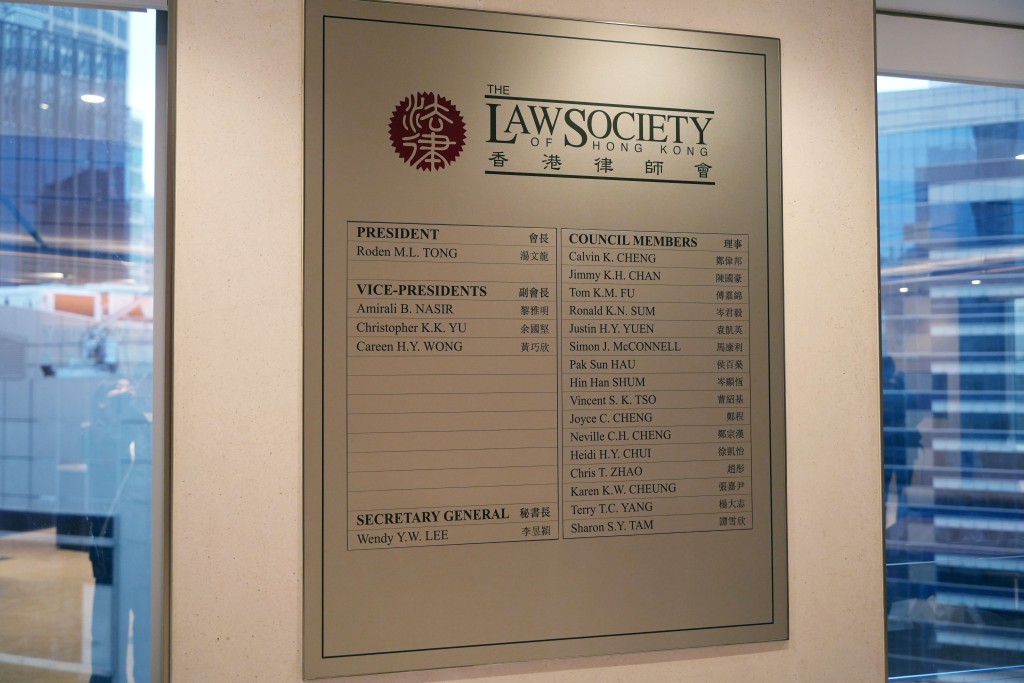
The Law Society of Hong Kong has asked the government to review existing law and consider statutory protections for portrait rights, personal image and publicity rights. Its Policy Address submission specifically points to unauthorized use of faces, voices and likenesses and the growing threat of AI deepfakes.
Why visual creators should care
Synthetic likeness disputes are currently being handled through a patchwork of privacy, passing-off, copyright, personality and other legal doctrines around the world. A dedicated portrait or publicity right would give photographers, agencies, performers and subjects a clearer framework for deciding what permission is required.
Practical takeaway
Even where a jurisdiction does not yet have a specific synthetic-likeness statute, record permission for generated versions of a person explicitly rather than relying only on a conventional photography release.
What to watch next
Watch whether Hong Kong's government takes the proposal forward and whether any future right distinguishes commercial synthetic use from journalism, documentary work, parody and ordinary photography.
Sources
Researchers are asking whether artists can make unauthorized training easier to prove later
A new preprint introduces MemCatalyst, a technique intended to improve later auditing of whether particular image-and-text material entered a vision-language model's training process. The system modifies a small number of samples using subtle image or text perturbations designed to strengthen membership-inference signals if those samples are later learned by a model. The researchers explicitly describe artists trying to audit unauthorized use of their work as a potential application.
Why visual creators should care
One of the hardest practical problems in AI training disputes is evidence. A creator may suspect their work was used while having no reliable way to test whether a closed model actually encountered it.
Practical takeaway
Treat this as experimental research rather than an available legal proof system. The important direction is that creator protection is moving beyond blocking scraping and towards making later training use auditable.
What to watch next
Watch independent testing on commercial models and whether similar auditing markers can survive ordinary web compression, resizing and metadata stripping without materially changing the creator's image.
Sources