Adobe is putting creator identity, AI provenance and a NoAI preference into the video export itself
Adobe updated its Premiere and Media Encoder Content Credentials guidance on September 9. Premiere can automatically validate Content Credentials attached to supported imported media, including footage from compatible cameras and AI-generated assets, and display credential status inside the project. At export, creators can sign supported output with a verified identity and linked accounts. Adobe also exposes a preference stating that generative AI models should not train on or use the creator’s content. When a Premiere sequence contains supported Adobe AI-generated assets, Premiere and Media Encoder notify the editor that Content Credentials will be included in supported exported formats.
Why visual creators should care
For filmmakers and editors, provenance is moving from a specialist verification step into the ordinary export dialogue. The finished file can carry information about who made it, AI involvement and a machine-readable preference about future AI use.
Practical takeaway
Check the Content Credentials panel before final delivery and preserve a credential-bearing master. If you use the training preference, save evidence of that preference with the project because downstream platforms may strip or ignore metadata even where Adobe embeds it correctly.
What to watch next
Watch whether broadcasters, streaming services and social platforms preserve these credentials after upload and transcoding, and whether AI-training systems actually honour the attached preference.
Sources
A new AI filmmaking workflow records which model made every shot and what reference material went into it
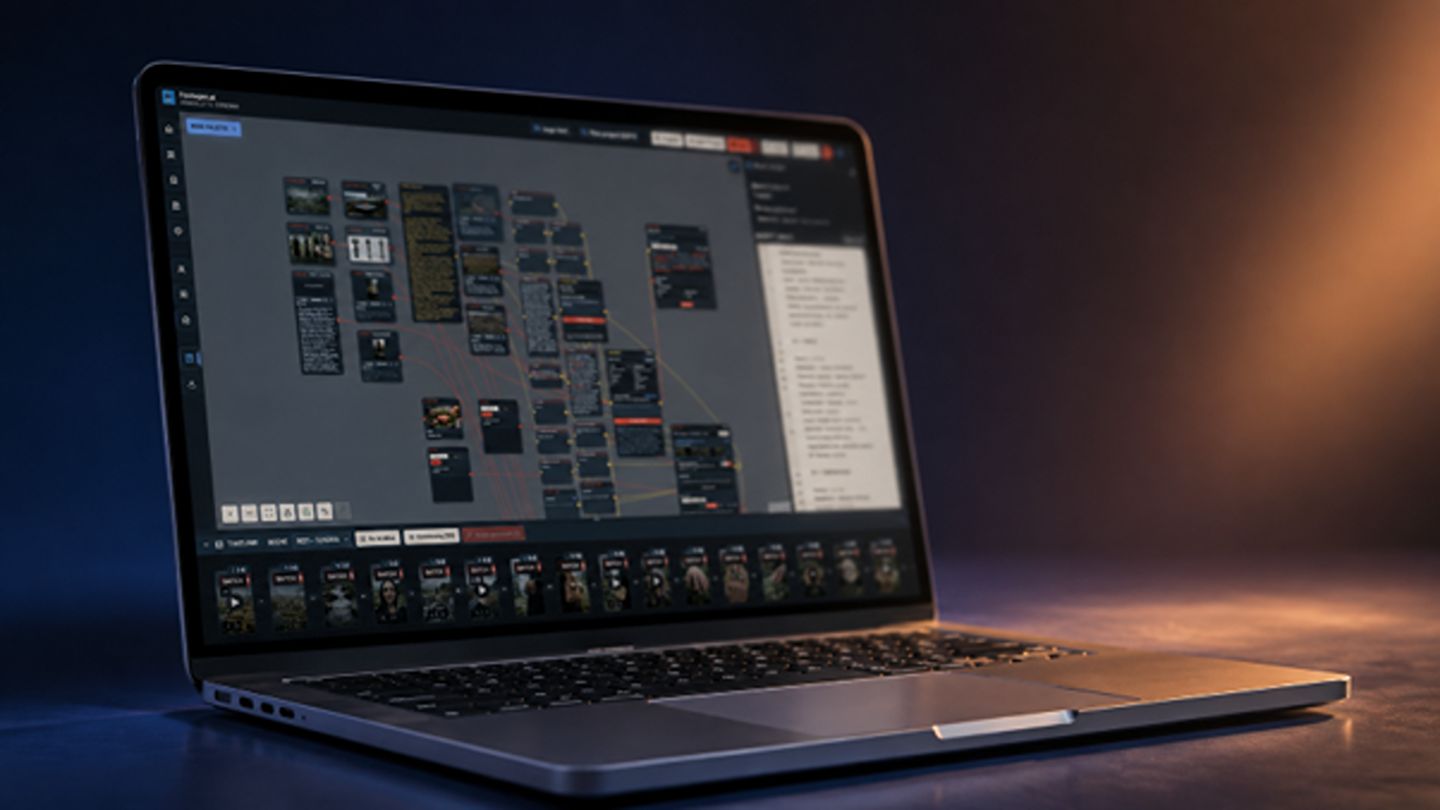
Frame Rate’s footagen.ai is being introduced at IBC after opening its waitlist on September 10. The production system sits above multiple image and video generators and lets filmmakers select models shot by shot. It records the model and provider used for each generated asset and preserves project metadata including prompts, reference material and timestamps. Project files and generated media remain on the user’s device by default, although generation data is sent to the selected third-party model provider and may be processed outside the EU or EEA. Frame Rate also says it aims to support C2PA Content Credentials on generated exports.
Why visual creators should care
A production using several AI models can otherwise become almost impossible to reconstruct after delivery. Recording the provider, prompt and references at shot level creates the sort of evidence studios may need for client approvals, rights clearance and later disputes.
Practical takeaway
For AI-native film work, maintain a shot-level generation log even if your current tool does not create one automatically. Include the model, provider, version where available, prompts, source images, approvals and the final asset derived from them.
What to watch next
Watch whether its planned C2PA implementation includes the same model, provider and reference information that is stored internally in the project record.
Sources
A video workflow at IBC today turns EU AI disclosure into an approval step rather than a label added afterwards
An IBC Future Tech demonstration scheduled for September 12 shows an end-to-end workflow built around Article 50 of the EU AI Act. A chat command triggers an AI video-clipping process in which every operation is recorded and classified as either assistive or substantive. The system compares an edit that does not require visible disclosure with one that does, refuses to publish without approval from a named human, adds the visible AI label where required and signs the finished output with C2PA Content Credentials chained to the source master.
Why visual creators should care
This turns compliance into production infrastructure. Instead of asking somebody at the end whether an AI label should be added, the system records what AI actually did and makes the disclosure decision part of the workflow.
Practical takeaway
For agencies and video teams working under Article 50, begin recording individual AI operations rather than simply marking the whole project 'AI-assisted'. The legal distinction between a technical assist and a material synthetic alteration can matter.
What to watch next
Watch whether this operation-level classification approach is adopted by editing systems, DAM platforms and agency approval tools rather than remaining a conference proof of concept.
Sources
A reverse-image search service says the photograph you use to hunt infringements is deleted after the search
Copyseeker’s Terms of Service were updated September 12. Its AI-powered reverse-image system is intended for uses including identifying unauthorised use of a creator’s photographs and locating original sources. The terms say users retain ownership of uploaded images and grant Copyseeker only a limited licence to process the file for the reverse-image search. Uploaded images are described as temporary processing material that is automatically deleted when the search is complete rather than permanently stored.
Why visual creators should care
Photographers increasingly upload valuable original work into AI-powered search and verification services precisely because they suspect it has been copied elsewhere. The privacy and training position of the search tool therefore matters almost as much as the results it produces.
Practical takeaway
Before uploading an unpublished or commercially sensitive photograph to an infringement-search tool, check whether the file is stored, retained for model improvement or licensed for any purpose beyond the requested search.
What to watch next
Watch whether reverse-image and AI-detection providers begin publishing auditable deletion and no-training commitments rather than relying solely on contractual statements.
Sources
A fashion-image platform requires brands to own the right to make an AI derivative of the product photograph
Setless is built for brands generating commercial fashion and product imagery. Its current AI policy requires uploaded product photographs to be owned by the user or used with explicit permission and requires the user to possess the rights necessary to reproduce, modify and generate derivative imagery from them. Its built-in models are synthetic personas, and the service prohibits using real identifiable people without explicit written consent or trying to create synthetic models that resemble specific real people.
Why visual creators should care
A brand can possess a photograph without necessarily having contracted for generative derivative rights. A photographer may have licensed ordinary advertising use while retaining control over material alteration, synthetic extensions or creation of entirely new campaign images from the source.
Practical takeaway
For commercial product shoots, specify whether the licence includes AI-derived campaign images, alternate environments, synthetic models or generated product views. Do not rely on possession of the delivered JPEG as evidence that those derivative rights were transferred.
What to watch next
Watch whether commercial product-image platforms increasingly require brands to identify the photographer or source licence behind uploaded material rather than accepting a general user warranty.
Sources
A product-photography platform is turning 'your catalogue will not train someone else’s model' into a contractual promise
Afterlight’s current Creator Data Rights Policy says brands retain ownership of uploaded product photographs, logos and other brand assets and also own the generated product imagery created for their account. The company states that customer catalogues are not used to train a model available to other customers and frames these commitments as terms of its contractual documents rather than merely marketing promises.
Why visual creators should care
Commercial product photography can contain unreleased products, confidential campaigns and distinctive brand assets. For agencies and brands, a no-shared-training promise can be as important as ownership of the final generated image.
Practical takeaway
For confidential AI product work, record both output ownership and the training treatment of uploaded source assets. 'You own your images' does not by itself answer whether those images can improve a model used by other customers.
What to watch next
Watch whether product-imagery platforms move toward standard contractual language distinguishing account-specific tuning from general model training and whether deletion can be independently verified.
Sources