Nick Knight’s H&M experiment starts with a real photograph and turns it into something else
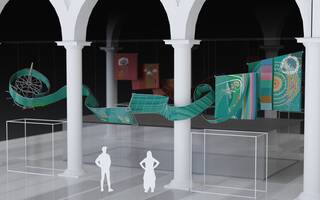
For H&M’s H&M&YOU&I London Fashion Week project, photographer Nick Knight and SHOWstudio began with conventional studio photographs of models Alex Consani and Archie Renaux, alongside illustrations made by Cliff Warner with the models present.
Those works then became source material for an AI-driven interactive system. Knight says the imagery was processed frame by frame using a range of AI techniques, with parameters controlling motion and visual alteration, allowing models and guests to affect newly generated moving imagery during the show. He says the original production followed a conventional collaborative fashion-image workflow and that AI entered at the later transformation stage.
Why visual creators should care
This is a useful professional example because it does not collapse photography and generation into the same act. There is a photographed source, identifiable human collaborators and then a separate generative transformation of those works. That is precisely the distinction creators increasingly need to record.
Practical takeaway
For AI-assisted campaigns, keep the original shoot and subsequent generation stages distinct in the project record. Record who was photographed, which photographs became reference material, what AI changed and whether the original model and photographer agreements permit those transformations.
What to watch next
Watch whether fashion brands begin writing AI transformation and interactive derivative uses explicitly into photographer, illustrator and model agreements rather than treating them as ordinary post-production.
Sources
California will require advertisements to say when the performer is synthetic
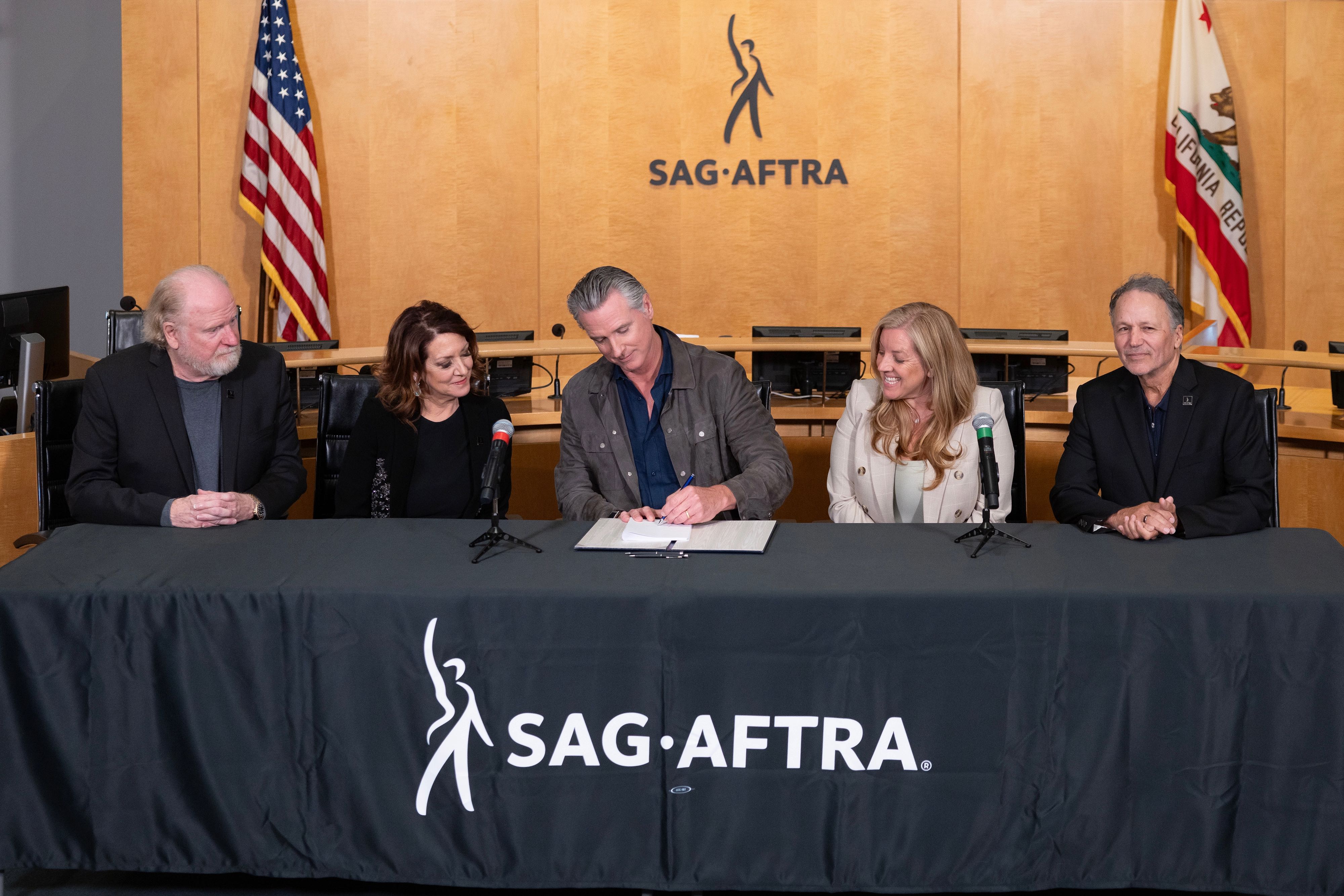
California Governor Gavin Newsom signed SB 1050 on September 16. The new law makes it an unlawful advertising practice to create and cause publication of an advertisement that prominently includes a synthetic performer without clear and conspicuous disclosure. The statutory definition covers a generative-AI-created figure, voice or representation that creates the realistic impression of a human performance but is not recognisable as an identifiable natural person. The law is scheduled to take effect January 1, 2027.
Why visual creators should care
For advertising agencies and visual-production teams, a convincing AI person can no longer simply be treated as another piece of generated creative. Whether a human-looking performer is real or synthetic becomes information that must travel into the published advertisement.
Practical takeaway
Add a synthetic-performer field to campaign records now. Record whether a human-looking person is real, an authorised digital replica of an identifiable person or a wholly synthetic performer, because those categories can carry different consent and disclosure rules.
What to watch next
Watch for implementation guidance before January 2027 and for agencies to standardise disclosure language and delivery specifications around synthetic performers.
Sources
A Montana court has exposed how difficult mandatory labels become when AI imagery is also expressive speech
US District Judge Susan Watters issued a preliminary injunction preventing Montana officials from enforcing the state’s election-deepfake law against Accountability in State Government and former state legislator Dan Bartel while their constitutional challenge proceeds.
The dispute followed political mailers combining authentic candidate photographs with realistic AI-generated alterations. The law restricted certain deceptive synthetic election communications while providing a disclaimer route and a satire exception. The judge found the plaintiffs were likely to succeed on their claim that the statute discriminated based on viewpoint because it treated harmful and favourable synthetic depictions differently. The injunction protects the named plaintiffs; it does not invalidate the law statewide.
Why visual creators should care
The case illustrates a broader problem for synthetic-image disclosure regimes: regulators have to define when an altered image becomes a deepfake, when disclosure is compulsory and how satire, artistic manipulation and other protected expression fit around that boundary.
Practical takeaway
Creators producing documentary, editorial, satirical or campaign imagery should not assume that adding an AI label resolves every legal question. Keep the original photograph and the transformation record so the nature and extent of manipulation can be shown independently of the label.
What to watch next
Watch whether Montana appeals and whether the court ultimately reaches a final constitutional ruling. Similar challenges in other jurisdictions will also shape how narrowly synthetic-media disclosure laws can be drafted.
Sources
An AI image platform is banning face swaps even when the subject has agreed
APImage updated its Acceptable Use Policy on September 18 for its image generation, editing, enhancement and analysis service and API. Users must hold the copyright, likeness and other permissions needed for material they submit. More unusually, APImage imposes an absolute prohibition on face swapping or transferring facial identity onto another body, frame or scene. The ban applies even when the depicted person has given written consent, when the user is manipulating their own face, when the result remains private or when the output is labelled as AI-generated. Businesses integrating APImage are also responsible for their own downstream users.
Why visual creators should care
Legal permission and platform permission are different things. A photographer may possess a valid model release for an AI transformation and still find that the chosen production tool contractually prohibits that transformation.
Practical takeaway
For likeness work, perform two checks: do you have permission from the person, and does the AI service actually permit the intended transformation? Do not treat a model release as permission to bypass the platform’s acceptable-use rules.
What to watch next
Watch whether more visual AI platforms move from consent-based face-swap rules to categorical prohibitions as they respond to deepfake regulation and abuse.
Sources
AI enhancement can invent plausible detail rather than recover what the camera actually saw
The AI Image Agent’s current terms make an unusually direct distinction about photographic enhancement. The service says users retain ownership of uploads and can use generated results commercially, subject to underlying third-party model terms. It also requires users to have permission before uploading photographs of other people. Crucially, its accuracy section warns that upscaling and photo enhancement reconstruct plausible detail rather than recovering what was actually present and says those results should not be relied on as evidence or as a faithful record.
Why visual creators should care
AI restoration and enhancement can look like conventional photographic correction while changing the evidential character of the image. A convincing eye, texture, licence plate, facial feature or background detail may be generated inference rather than recovered information.
Practical takeaway
Keep the unenhanced original whenever factual accuracy matters. Label an AI-enhanced derivative appropriately and never substitute it for the source file in documentary, evidential or archival workflows.
What to watch next
Watch whether professional imaging tools begin recording generative reconstruction separately from conventional tonal, sharpening and noise-reduction operations in provenance metadata.
Sources
The V&A is putting the missing context of AI training data inside the artwork itself
The V&A’s Sender Unknown display opens September 19. Uzbek visual artist Aziza Kadyri responds to the museum’s historic suzani embroidery collection using a bespoke AI model to develop a new visual language of suzani symbols, which female artisans in Nurota, Uzbekistan then hand-embroidered. The museum explicitly frames the project around what happens when visual material enters datasets: images can become detached from authorship, women’s labour, migration, intergenerational knowledge and other cultural context.
Why visual creators should care
The project moves the training-data debate beyond whether an image was legally accessible. Visual works can carry authorship, craft knowledge and cultural history that a model may reduce to reusable pattern even when the resulting generated image looks formally convincing.
Practical takeaway
For artists building custom or bespoke models, document more than the filenames in the training set. Record the maker, provenance, cultural context, permissions and intended purpose of important reference material where those factors matter to the work.
What to watch next
Watch whether museums and commissioning organisations begin asking artists to describe the provenance and permissions of custom-model datasets alongside the conventional materials list for an artwork.
Sources