Denmark moves from deepfake warnings to a bill protecting faces and performances
Denmark's culture minister Zenia Stampe presented an 8 October proposal to amend copyright law so realistic digital imitations of a person's appearance or voice cannot be shared without consent. The proposal is intended to protect ordinary people and performers, and to make removal of harmful manipulated content easier. It preserves qualified exceptions for satire, parody, caricature and political or social criticism. The bill follows a broad political agreement from June 2025, still needs parliamentary approval, and is intended to take effect around the beginning of 2027.
Why visual creators should care
The proposal uses copyright legislation to address digital identity and performance imitation, not just copied photographs. It could affect photographers, agencies and filmmakers producing realistic synthetic people or recreating performances.
Practical takeaway
Get written, use-specific permission before creating or distributing a realistic digital double; distinguish ordinary retouching from a generated imitation of a person's identity.
What to watch next
Watch the Danish parliamentary process, the final wording of the parody and criticism exceptions, and whether other European countries adopt similar rules.
Sources
Ariana Madix says she agreed to film the promo, not to its AI treatment
Ariana Madix criticised Love Island Australia after an AI-generated promotional video incorporated footage from a cameo she had genuinely filmed. She said she had not been told AI would be used in the final production and objected publicly to the technology's inclusion. The programme's promo was intended to introduce its 2026 season. The reporting establishes Madix's objection, not a court finding or a proven breach of her release agreement.
Why visual creators should care
Consent to appear in a photograph or film does not necessarily answer whether the subject agreed to synthetic alteration, generated surroundings or a new AI-mediated representation. The scope of the release and approvals becomes central.
Practical takeaway
Separate camera-performance permission from consent to generative alteration. Give subjects and clients clear descriptions of proposed AI transformations and record approval of the finished treatment.
What to watch next
Watch for a response from the production company and any clarification of the release or approval process. No legal action has been established in the available reporting.
Sources
The Minnesota nudification case is a temporary court order, not a final ruling on deepfake rights
On 2 October, the US Court of Appeals for the Eighth Circuit granted xAI an injunction pending appeal in its challenge to Minnesota's law restricting AI-generated nudified images. The brief order provides temporary relief from enforcement while the appeal proceeds. It does not determine whether the statute ultimately violates the First Amendment or resolve the wider legal status of non-consensual synthetic imagery.
Why visual creators should care
Visual AI platforms face conflicting legal arguments about non-consensual image manipulation, free expression and platform responsibility. A temporary procedural ruling should not be confused with a substantive decision approving the creation or distribution of such images.
Practical takeaway
Do not assume a model's technical availability or a preliminary court order makes a particular synthetic image lawful. Maintain consent and content-use restrictions independently of provider access.
What to watch next
Watch the Eighth Circuit appeal for a reasoned decision and any narrowing or clarification of the statute's scope.
Sources
Greta Garbo returns in a commercial — with several separate permissions behind the image
Swedish manufacturer SKF has released a commercial digitally recreating Greta Garbo's appearance and voice, developed with the involvement of her estate and family. SKF said it did not use archival photographs or footage to construct the visual double, citing copyright concerns; the likeness was generated using text prompts and multiple image/video models. For the synthetic voice, it obtained permission to use audio from one of Garbo's early films and worked with a human performer on delivery. The company says it has been transparent about the use of AI. The campaign was reported on 2 October.
Why visual creators should care
It shows that estate approval, rights in archival footage or sound recordings, and permissions for a generated performance are different clearance questions. A respectful or authorised recreation can still be controversial to audiences.
Practical takeaway
For synthetic performers, maintain a rights matrix identifying estate/subject consent, recordings used for training, model terms, new performance permissions and how the result will be labelled.
What to watch next
Watch whether advertisers and performer estates publish more standardised terms for posthumous digital doubles and limits on future reuse.
Sources
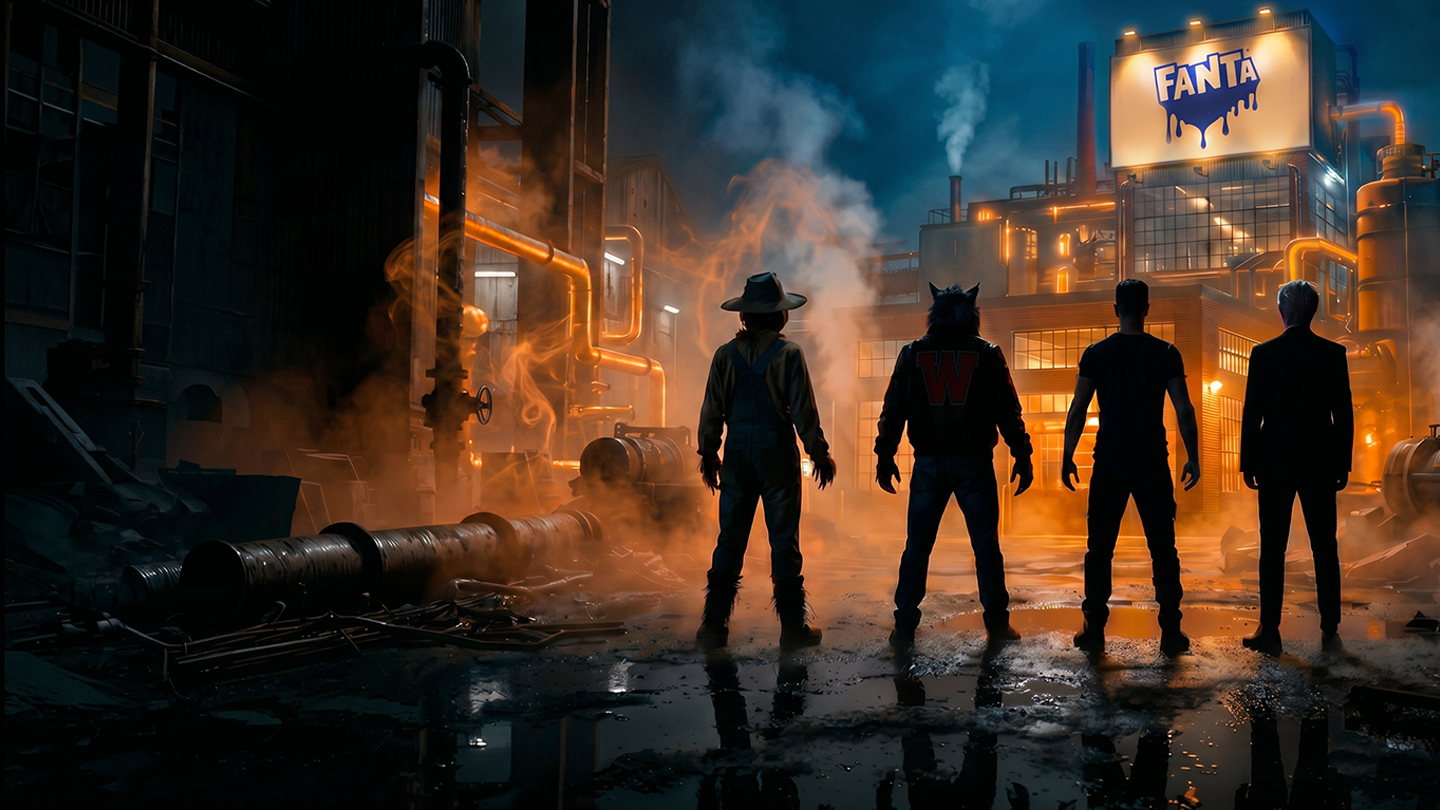
Fanta’s AI Halloween campaign is a reminder that owning characters is not the same as winning audience trust
An 8 October Creative Bloq assessment describes negative online reactions to Fanta's AI-heavy Halloween advertising, created with AI entertainment studio GRAiL. The campaign itself launched in August: Fanta's Haunted Universe is intended to create recurring original monster characters, while Ghost Face appears through a separate licensing partnership with Fun World and Paramount+. This is not a new launch or legal dispute, but a fresh look at audience response to a major commercial generative-image campaign. Reported criticism is anecdotal and should not be presented as representative consumer polling.
Why visual creators should care
Commercial visual work has two tests: can the assets be used and controlled, and does the finished execution help the brand? Generated characters and licensed film IP still require an organised rights chain and editorial quality control.
Practical takeaway
Before rolling out AI-created campaign assets, verify rights in licensed characters and voices, keep human design/editing records, and test the visual treatment with the intended audience rather than assuming faster production means stronger advertising.
What to watch next
Watch whether the recurring original characters continue into future seasons and whether the brand changes its AI-led creative approach following the criticism.
Sources
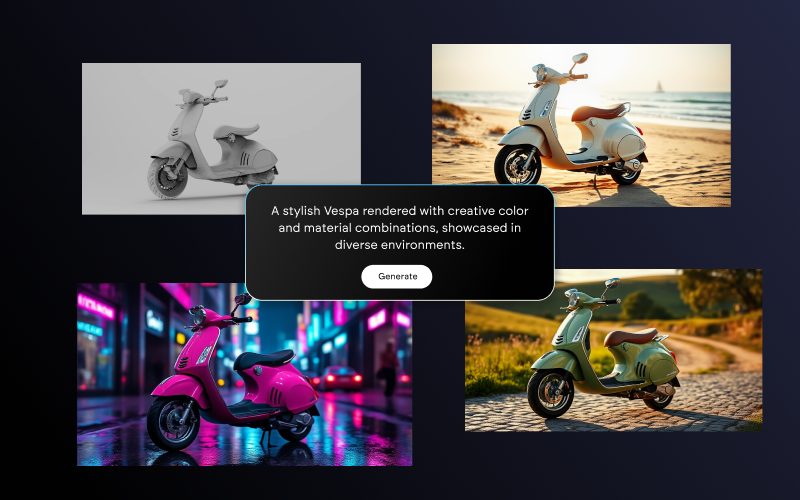
A fresh KeyShot review shows local generative product imagery still needs factual checking
An 8 October hands-on review of KeyShot 2026 examines AI Shots, which can restyle CAD-based product imagery, replace elements and upscale renders while running locally rather than uploading customer geometry to a cloud model. The reviewer found the tools useful but sometimes slow or prone to misinterpreting prompts. The underlying 2026.1 features launched earlier in the year, so the new development is the independent workflow assessment, not a product launch. KeyShot's own documentation says the system is fine-tuned to respect CAD geometry and reduce invented details, but it cannot guarantee that generated outputs are free of copyright or trademark issues.
Why visual creators should care
For product photographers, designers and agencies, AI-generated settings can cut production time without surrendering confidential product geometry. However, a plausible-looking render may depict materials, components or product features that do not exist.
Practical takeaway
Keep the original CAD model and approved render beside each AI variation. Review product shape, materials, features and trademarks before client delivery; check licensing independently of the software's commercial-use permission.
What to watch next
Watch improvements in CAD fidelity and whether local-only generative workflows become a client requirement for unreleased products and confidential designs.
Sources