Tropfest will allow AI assistance but reject films substantially generated by AI
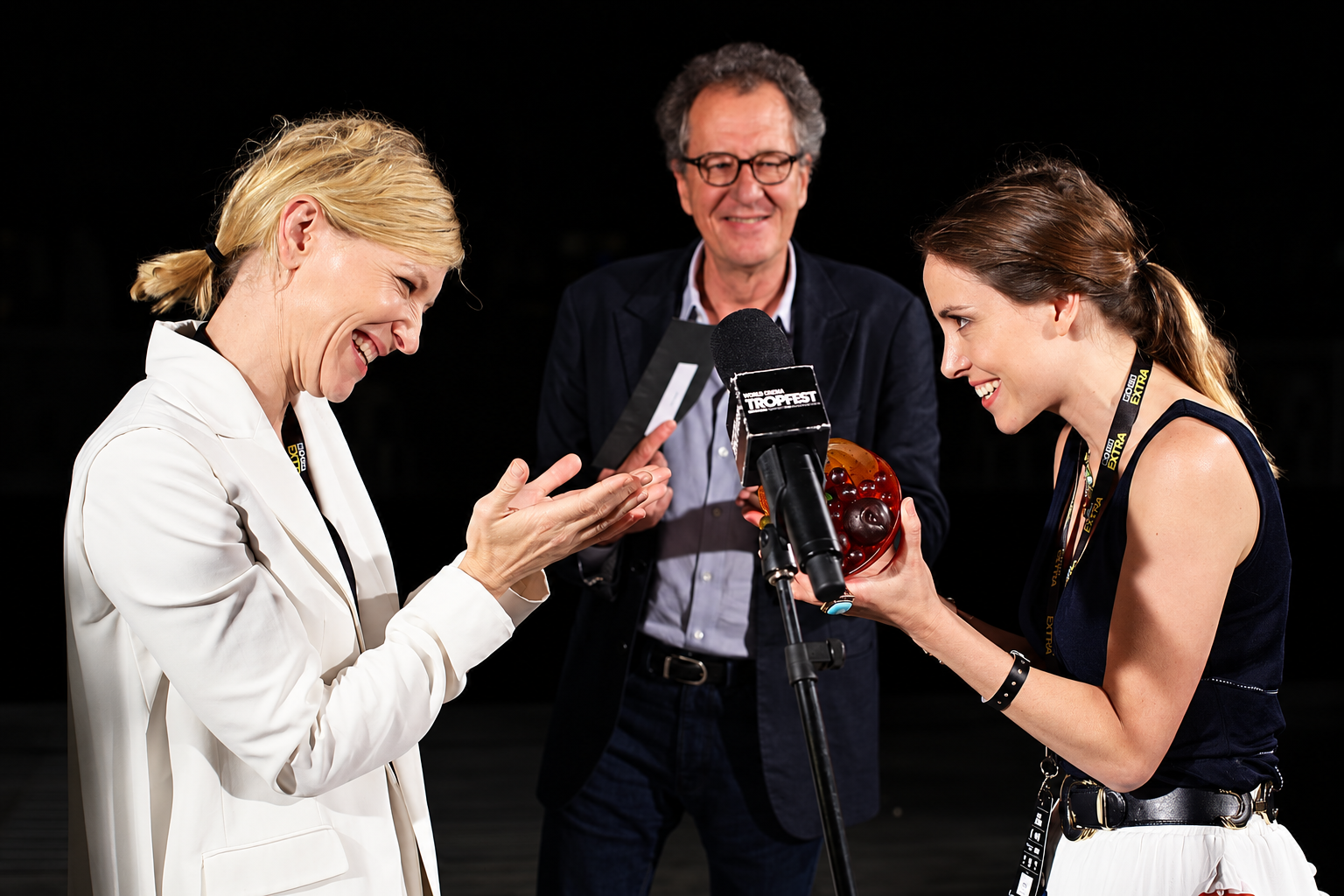
Tropfest has published its entry guidance for the February 13, 2027 festival. AI tools may support research, transcription, editing, colour grading, sound clean-up and similar production work. But films substantially dependent on generative AI for central creative elements such as screenplay, performance, dialogue, characters, cinematography, animation or imagery are ineligible. Entrants must disclose whether and how they used AI. The festival reserves discretion and says final entry terms will prevail. Entries open December 1. This follows controversy over an AI-generated short admitted to the 2026 festival.
Why visual creators should care
It distinguishes ordinary assistance from substitution of core authorship and makes a production-level disclosure necessary before a film can compete.
Practical takeaway
Keep a shot-by-shot and department-level record of AI use, distinguishing technical clean-up from generated performances, visuals, animation and dialogue. Do not assume that disclosing an ineligible generative workflow makes it eligible.
What to watch next
Watch for the final entry terms and any clarifications about borderline workflows such as generated environments behind filmed actors.
Sources
Google opens a public watermark check for images and video from multiple AI providers
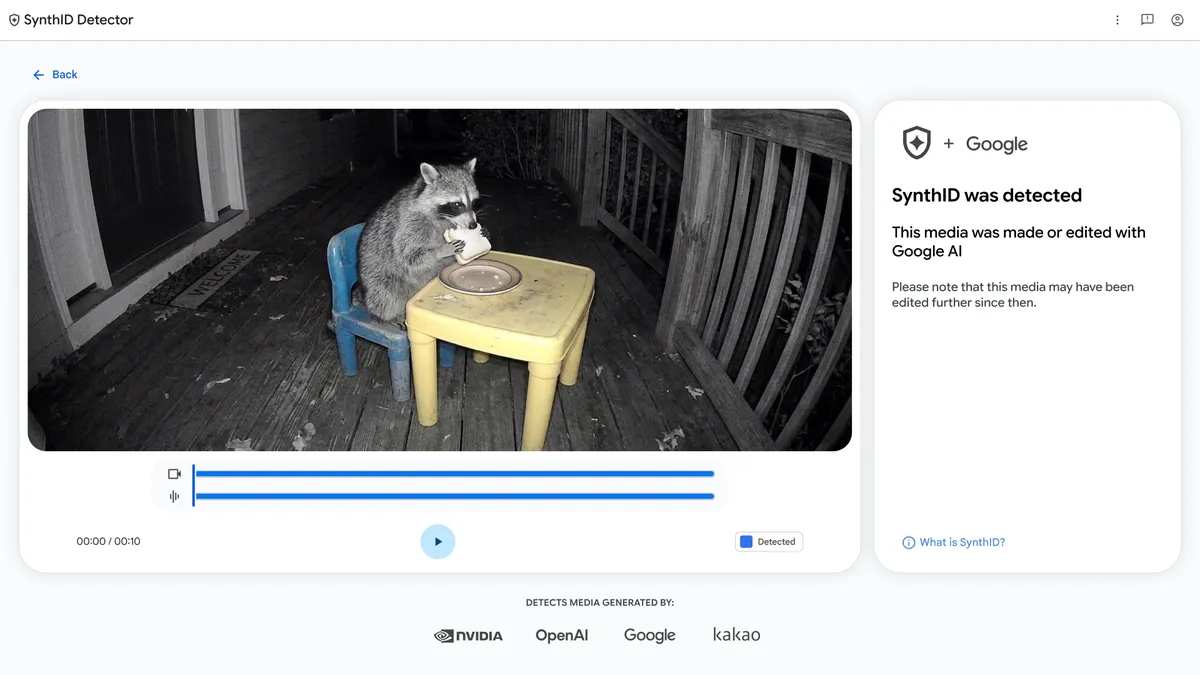
On October 7, Google made its SynthID Detector available globally in English to the general public. The tool checks uploaded image, video and audio files for invisible SynthID watermark signals from Google and participating partners including OpenAI, NVIDIA and Kakao, with Apple support announced as forthcoming. Google says SynthID has been used on more than 180 billion images and videos. Access requires sign-in, and reporting indicates a limited daily check quota. A negative result cannot establish that a file was not generated by AI, because many generators are not covered and watermark detection has limits.
Why visual creators should care
Editors, agencies and photographers now have an accessible cross-provider check for certain synthetic assets, but it is not a general AI detector or proof that an image depicts reality.
Practical takeaway
Use SynthID checks as one provenance signal. Keep original files, signed Content Credentials and capture records; never treat an absent watermark as proof of camera origin.
What to watch next
Watch whether additional model providers join and how the detector handles recompressed, cropped and heavily edited images.
Sources
500px draws a 10% AI-editing boundary for stock licensing
The currently published 500px Licensing Contributor FAQ rejects AI-generated submissions and says photographs with more than 10% of the image edited using AI tools are ineligible for commercial licensing. It warns that substantially AI-edited submissions can lead to account suspension or bans. If a genuinely camera-captured photograph is incorrectly flagged, contributors may appeal by supplying the image and its original RAW file. The FAQ does not state how the 10% threshold is measured, and no reliable publication or update date is visible; this is a current policy review, not a newly announced change.
Why visual creators should care
This is an unusually specific platform boundary with direct financial implications for photographers licensing through 500px and its distribution partners. The absence of a defined measurement method creates practical uncertainty.
Practical takeaway
Keep original RAW files and a record of generative edits. Before submitting AI-assisted photographs to stock, check the exact platform rule and ask how any percentage threshold is applied.
What to watch next
Watch whether 500px clarifies what constitutes 10% editing, how automated flags are reviewed and whether the rule changes.
Sources
Qwen releases a faster image generator, but open weights do not mean commercial rights
On October 9, Alibaba’s Qwen team released Qwen-Image-2.1-Turbo, a downloadable image-generation and image-editing checkpoint based on the Qwen-Image-2.1 visual architecture. Its published recommended schedule uses eight denoising steps, and the model card documents image editing, multiple aspect ratios and sample outputs. Qwen also offers hosted services. The weights carry the Qwen Research License, which is not a blanket commercial-use grant; commercial deployments require separate permission under the published licensing terms. Performance and quality claims have not been independently established for every professional workflow.
Why visual creators should care
Smaller and faster image systems make local production and client-specific workflows more accessible, but the right to download a model is not the right to use it commercially.
Practical takeaway
Keep the model card, licence version, deployment route and permissions alongside each client project. Distinguish research use of downloaded weights from any separately contracted commercial service.
What to watch next
Watch independent quality testing, hardware requirements, commercial licence availability and how output rights are handled in hosted products.
Sources
Ava DuVernay animates archival photographs for a documentary about American history
Ava DuVernay’s documentary 14th premiered at the New York Film Festival on October 9. Reporting from a festival press event says the film uses generative AI to animate historical photographs, adding movement to archival figures. DuVernay connected the approach to the depth and immediacy of nineteenth-century stereoscopic photography. A contemporaneous Guardian review independently describes the film adding movement and dimension to archival photographs. The reporting does not establish the specific rights clearance for each archival source or the film’s complete on-screen disclosure practices.
Why visual creators should care
Animating a historical still creates an expressive interpretation of a real image. In documentary work, viewers need to understand the difference between authentic archival evidence and newly generated movement.
Practical takeaway
For historical reconstruction, retain the original still and a record of synthetic motion, restoration and editorial choices. Avoid describing generated actions as footage of an event that was actually filmed.
What to watch next
Watch how the film credits and describes its generative sequences when it reaches cinemas and streaming, and whether documentary standards respond.
Sources
An Australian illustrator describes a market visitor photographing and replicating his artwork with AI
In reporting published October 9, Australian painter Cam Foster, who has also worked as children’s illustrator Beau Wylie, describes a visitor at a Sydney market photographing a painting of a cat in a yellow raincoat and using ChatGPT to generate a similar image. Foster objected to the unapproved reuse and shared a public warning. The account is an artist’s reported experience, not a court finding that copyright infringement occurred; the precise generated output and permissions have not been independently examined.
Why visual creators should care
Image-to-image workflows can put a creator’s existing work directly into a generator without that creator’s approval. This raises distinct questions about input permissions, copying of protected expression and the user’s intended commercial use.
Practical takeaway
If asked to recreate a living artist’s work from a photograph or screenshot, check the rights to the reference and whether the output reproduces protectable expression. For your own work, preserve original files and dated publication records.
What to watch next
Watch for any documented follow-up, formal complaint or legal action; do not treat an allegation as an adjudicated infringement.
Sources