Nikon withdraws a winning microscopy video after reviewing its generative AI use
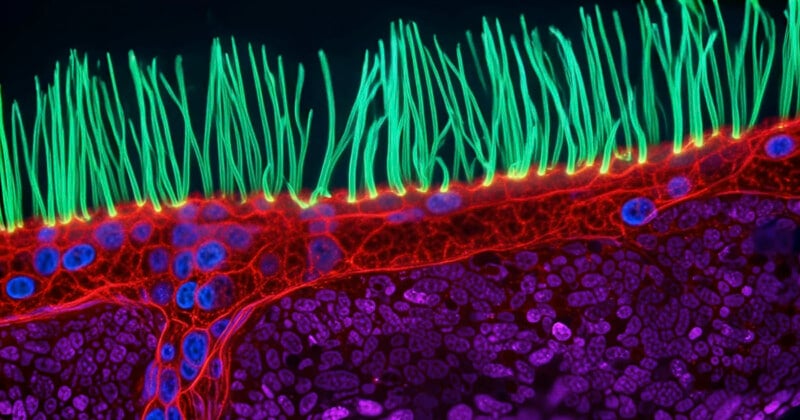
Nikon has disqualified the original first-place winner of its 2026 Small World in Motion competition after determining that the submitted video did not comply with the competition's rules regarding generative AI. The decision was announced on October 9 following a review of the video, supporting materials and input from judges. The original winner, Dr Ning Xu, had submitted microscopy footage depicting the movement of airway cilia. Scientists questioned the appearance and behaviour of structures in the video. Xu acknowledged using AI during post-processing but maintained that the original microscopy and biological motion were not generated. Nikon has not publicly established every technical transformation involved and emphasised that its decision concerns eligibility rather than the entrant's professional reputation, scientific contributions or intent. Nguyen Nam Nhat is now listed as the competition's first-place winner. Nikon says it will review its competition rules and evaluation procedures.
Why visual creators should care
This is a concrete example of the difficulty in distinguishing computational enhancement, reconstruction and generated visual information. That distinction matters particularly when an image is presented as scientific or documentary evidence.
Practical takeaway
Keep original capture files and document every computational or generative stage. Competition entrants should obtain clarification when an AI-assisted reconstruction might fall outside the permitted editing rules. Do not assume that disclosure alone establishes eligibility.
What to watch next
Watch Nikon's revised competition guidance and whether it publishes clearer distinctions between acceptable scientific processing and prohibited generative reconstruction.
Sources
AI watermark removal is becoming a direct commercial problem for working photographers
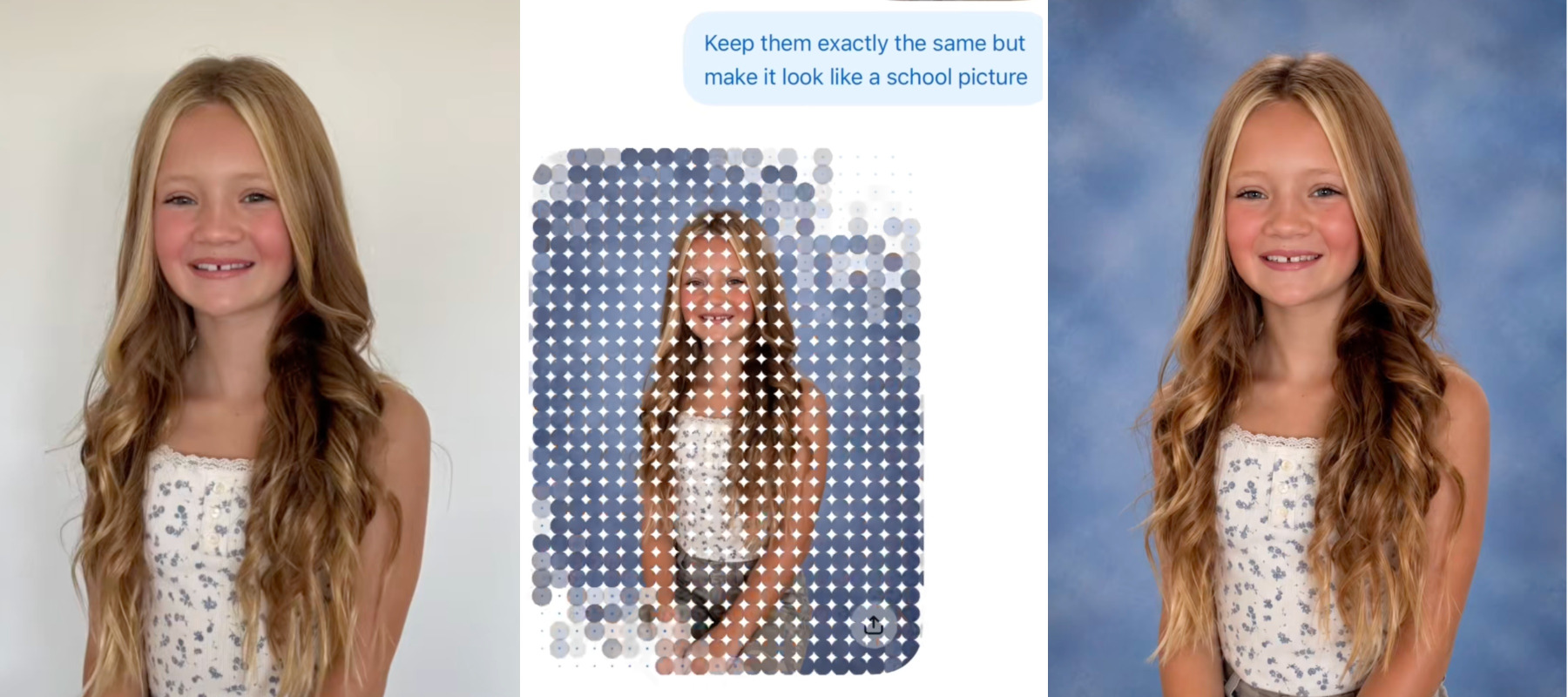
Recent reporting describes customers using generative AI tools to remove watermarks from unpaid school, wedding and event photography proofs. The Times reported concerns from British professional photographers about lost sales and the exposure of children's images to external AI services. An October 10 Moneywise investigation examined the legal implications in the United States, including comments from attorney Mickey Osterreicher, general counsel of the National Press Photographers Association. The reporting distinguishes between generating school-style portraits from photographs taken by parents themselves and removing a professional photographer's watermark from an unpaid proof. The latter may involve copyright infringement and, depending on the circumstances, removal of copyright management information. US statutory damages can be substantial in qualifying cases, but the highest statutory figures are not automatic penalties for every incident.
Why visual creators should care
School and event photographers often depend on selling finished photographs after providing previews. Generative editing tools can undermine that business model by allowing customers to obtain usable images from unpaid proofs.
Practical takeaway
Retain original files, copyright records and evidence of how proofs were supplied. Review preview resolution, delivery controls and licensing language. Distinguish lawful creation of new portraits from unauthorised alteration or reproduction of a photographer's existing work.
What to watch next
Watch whether professional photography associations pursue clearer guidance or enforcement mechanisms and whether AI editing services strengthen restrictions on removing third-party copyright information.
Sources
iStock's AI-free promise applies to its library, not necessarily to what customers make afterwards
An October 10 Digital Camera World investigation highlights an apparent contradiction in iStock's presentation of artificial intelligence. The Getty Images-owned service promotes its shared image library as containing human-created rather than AI-generated visual material. Yet customers can use generative editing tools to modify photographs after selecting them. The journalist demonstrated changes to objects and colours, including replacing the appearance of a bathroom fixture. The distinction is important: the original stock image can be human-created even if a subsequent customer-directed version contains generated elements. The article establishes the customer-facing workflow, not that iStock has breached contributor agreements or changed its licensing terms.
Why visual creators should care
Photographers may supply camera-originated images to a stock platform while customers subsequently use AI to transform them. Agencies buying images under a no-AI requirement must distinguish the provenance of the licensed original from that of the finished advertisement or design.
Practical takeaway
Check the applicable stock licence before generatively modifying purchased imagery. Record which parts of the final image were generated and review model releases, property permissions and any client restrictions on AI use.
What to watch next
Watch whether iStock clarifies its AI-free marketing language and the treatment of customer-created derivatives, particularly where generated modifications change identifiable people or commercial representations.
Sources
An 83-minute AI television series reveals the actual work behind generated filmmaking
The creators of The Arc, a five-episode science-fiction series totalling approximately 83 minutes, have described their production process in an October 11 Business Insider interview. Director Darin Stewart and executive producer Simone Ferretti said the project used approximately $38,000 in AI-generation credits supplied by Artlist. They reported averaging eight to ten generations for an individual shot and using lower-resolution outputs during development before committing resources to higher-quality renders. The team developed scripts, visual references and character designs before generating video primarily with Seedance and Kling. The first episode was delivered after approximately three and a half weeks. The series used no filmed actors, physical sets or props. The $38,000 figure represents reported generation credits, not a complete audited production budget including all labour, software and other costs.
Why visual creators should care
The project provides concrete information about how generative video production operates. Rather than eliminating production planning, it moves substantial work into prompting, iteration, art direction, editing and consistency management.
Practical takeaway
For AI-assisted filmmaking, track generation attempts, compute costs, model versions, reference materials, licences and human labour separately. Do not compare generation-credit expenditure with a conventional film's complete production budget.
What to watch next
Watch whether future productions disclose complete budgets and whether distributors require more detailed documentation of model licences, reference imagery and synthetic performances.
Sources
Magnific brings automated art direction and brand guidelines into image generation
Magnific announced Magnific One on October 8, describing it as an image-generation model designed to apply art-direction decisions before producing an image. The company also introduced Brand Kit, which can analyse supplied websites, brand-guideline PDFs, images and written descriptions to propose a consistent visual system covering elements such as logos, colours, typography and imagery. Teams can review and refine the resulting kit before using it to guide generated assets. Magnific says the tools are available through its paid plans and supported interfaces. Claims about image quality, consistency and creative performance come from the company's announcement and have not been independently verified.
Why visual creators should care
Generative image tools are moving beyond isolated prompts toward repeatable agency workflows. Brand consistency and art direction are becoming features of the generation system itself rather than exclusively manual production stages.
Practical takeaway
Before uploading a client's brand guidelines, campaign photography or confidential references, confirm permission and review the provider's applicable data-use and retention terms. Maintain human approval of generated brand assets and check for inaccurate logos, products or protected visual material.
What to watch next
Watch independent testing of brand consistency and whether professional clients begin requiring documented approval processes for AI-generated campaign variations.
Sources
New research shows how invisible AI image watermarks can be weakened without obvious visual damage
Researchers published a preprint on October 1 examining weaknesses in invisible watermarks used to identify AI-generated images. Their proposed technique, Latent Frequency Masking, modifies selected frequency components in an image's latent representation. The researchers evaluated the approach against six diffusion watermarking methods and reported that it could remove or substantially weaken several watermark signals while maintaining perceptual image quality. The paper also examines the relationship between image distortion and the watermark-removal process. The results concern the tested methods and conditions; they do not establish that every invisible watermark can be removed or that all watermark detectors are ineffective. The work remains a research preprint.
Why visual creators should care
Invisible watermarks are increasingly used to identify synthetic imagery. Their reliability depends not only on detecting an original signal but also on whether that signal survives subsequent processing, editing and deliberate manipulation.
Practical takeaway
Treat invisible watermark detection as one part of a provenance assessment. Preserve signed provenance records, original assets and edit histories rather than relying on the continued presence of a single embedded signal.
What to watch next
Watch independent replication, further robustness testing and whether watermark providers incorporate the reported weaknesses into their evaluations.
Sources