Getty plans a prepackaged Chapter 11 restructuring — and says contributor payments will continue
On October 12, Getty Images announced a restructuring agreement with its major financial stakeholders. Affiliates of the Getty family and Koch Equity Development have committed up to $533 million in new equity, with creditors agreeing to debt reductions and extended terms. Getty plans to seek approval for a prepackaged Chapter 11 filing involving certain US entities in the coming weeks and expects to emerge as a private company by year-end. It says operations, employees, contributors, customers and vendors should be unaffected and ordinary-course payments should continue. These are the company's stated plans: the filing and restructuring have not yet been completed. Getty also describes its licensing of authentic photographs and generative AI services trained on permissioned content as parts of its business.
Why visual creators should care
Getty is a major marketplace for professional photographs, editorial video and licensed AI imagery. Financial restructuring creates practical questions about royalty continuity, contributor agreements and future licensing strategy without proving that payments have stopped.
Practical takeaway
Keep copies of contributor contracts, current royalty statements, unpaid balances and licensing records. Monitor official communications; do not assume the announcement means Getty has already filed for bankruptcy or suspended royalties.
What to watch next
Watch the actual Chapter 11 filing, court-approved treatment of contributor obligations, any changes to royalty reporting and any revised AI-training or licensing terms.
Sources
AI-generated cartoons are appearing with real illustrators’ signatures
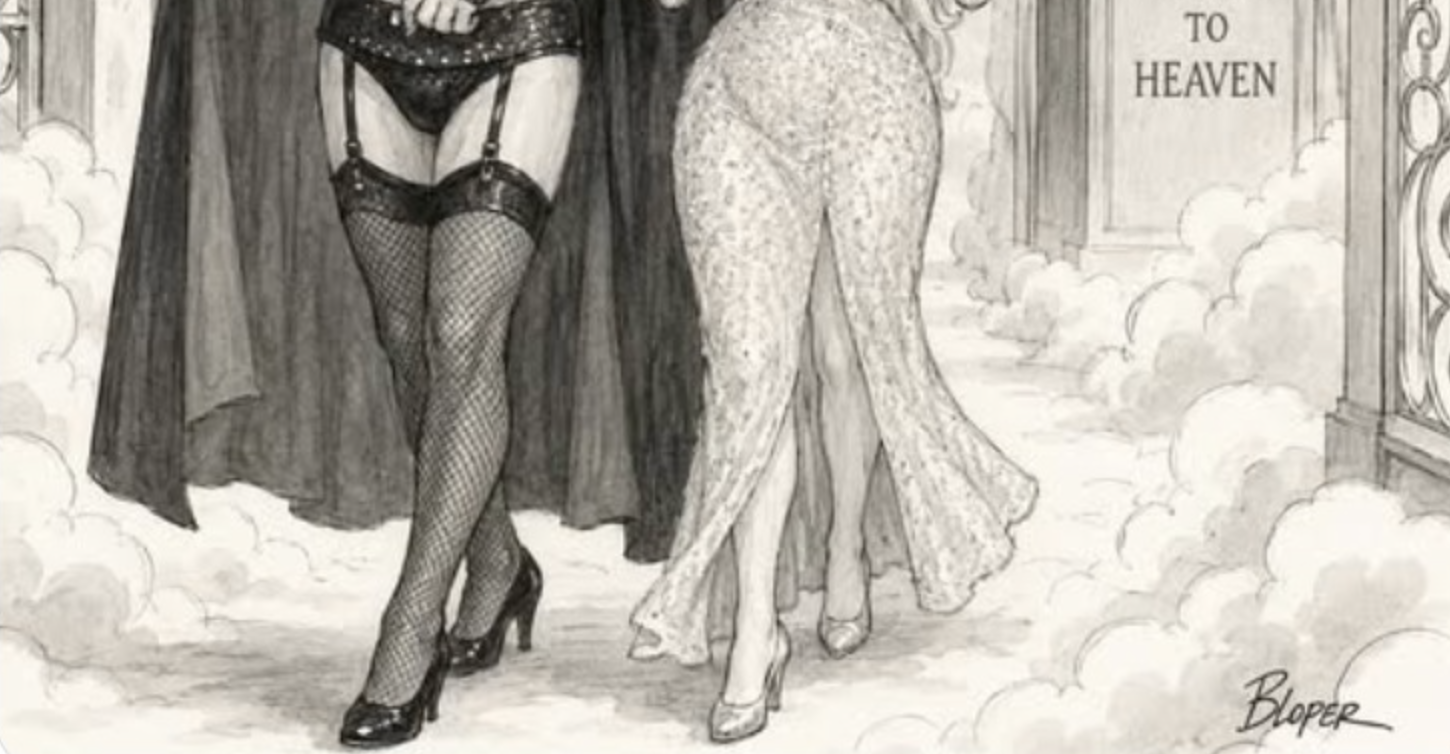
An October 12 Creative Bloq report draws attention to an October 5 original investigation by Nieman Lab. The investigation documented ChatGPT-generated New Yorker-style cartoons carrying signatures associated with more than 15 real cartoonists, including Brendan Loper and Emily Flake. Loper described receiving messages from people who thought he had drawn a viral cartoon. Nieman Lab conducted its own tests, and reported that OpenAI called the behaviour unintended and said it valued reports of such bugs. Some generated images still carried real signatures at the time of the original investigation. The reporting does not establish that the affected artists' individual works were copied wholesale, or that a court has found infringement.
Why visual creators should care
A recognisable artist signature is an assertion of authorship and reputation, not merely a stylistic flourish. False attribution can confuse clients and audiences even where the legal test for copying an individual illustration is uncertain.
Practical takeaway
Check AI-generated commercial art for embedded signatures, logos and apparent creator credits before delivery. Do not distribute work attributed to an artist who did not create or approve it; keep records and report false attribution to the generator.
What to watch next
Watch for documented changes to model safeguards, formal complaints by affected artists and whether platforms offer practical remedies for falsely signed synthetic images.
Sources
Nicolas Cage says he refused an AI waiver for Spider-Noir
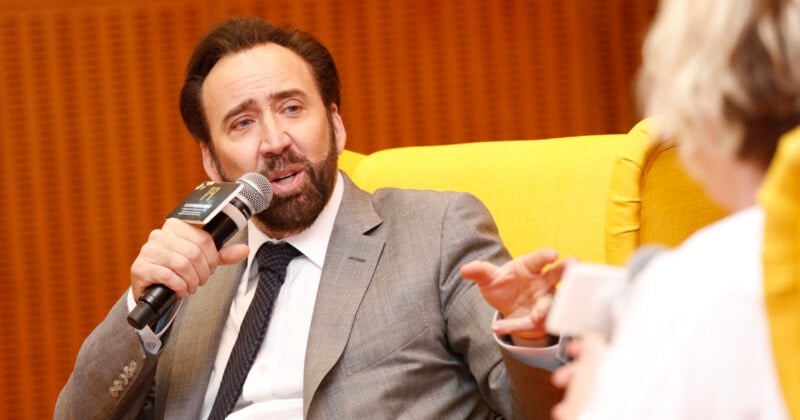
Speaking at New York Comic Con on October 10, actor Nicolas Cage said he had declined to sign an AI waiver in connection with the television series Spider-Noir. His comments were reported on October 12 by PetaPixel, citing Variety. Cage expressed concern about the place of human performance in an industry adopting generative tools. The reporting does not reproduce the waiver, establish precisely what uses it would have authorised, or prove that the studio used his likeness or performance without consent. The significance is his public account of declining a proposed permission, not an allegation that an unauthorised synthetic performance has already occurred.
Why visual creators should care
For filmmakers, production companies and agencies, the scope of a performer release matters. Consent to be filmed or photographed should not be assumed to include generating new actions, dialogue or digital doubles.
Practical takeaway
Treat AI performance permissions as explicit, separately documented rights. Describe proposed synthetic alterations, reuse, duration, media and approval steps before requesting consent.
What to watch next
Watch for clarification of the waiver terms and whether performer contracts distinguish conventional VFX, AI-assisted editing and synthetic re-performance more precisely.
Sources
Major news publishers expand a coalition for tracking and licensing AI use of their content
Reuters reported on October 12 that more than 40 publishers, including the New York Times, AFP and The Economist, had joined the Standards for Publisher Usage Rights (SPUR) coalition. The organisation now has more than 80 members in over 20 countries, including founding member Associated Press. SPUR is developing technical and commercial approaches to track and license AI use of publishers' material; its Content Telemetry Standard v1 was published on October 2. The initiative covers publishers' content broadly. Neither the new membership announcement nor the published standard establishes a new payment entitlement for individual freelance photographers or a complete solution for identifying each image used in AI training.
Why visual creators should care
Newsrooms license large quantities of photography and video alongside text. Publisher-level AI tracking could affect future negotiations about visual archives, but ownership and contractual rights of individual contributors still matter.
Practical takeaway
Review editorial image contracts for AI-training and sublicensing permissions. Ask publishers whether any AI-content licence includes freelancer imagery, how use is recorded and whether compensation is passed through.
What to watch next
Watch for image-specific telemetry guidance, uptake by AI companies and clearer terms for contributors whose work sits inside publisher archives.
Sources
Galleri5 expands AI filmmaking tools around shot consistency and VFX pipelines
On October 12, The Economic Times reported that Galleri5, backed by Collective Artists Network, had unveiled expanded capabilities for its AI Studio platform at a Hyderabad event. The company describes an integrated system drawing on more than 200 AI models, with a Movie Agent for story and shot development, AI-assisted VFX for live-action footage, digital avatars, character consistency tools and combined 3D, animation and compositing workflows. Galleri5 says it has tested the technology on its own productions and produced more than 10,000 commercial AI videos. Those figures and claims are company-reported, not independent assessments of quality, rights clearance or cost savings.
Why visual creators should care
Professional AI video systems are shifting from single generated clips towards continuity across shots, performers, sets and compositing. This changes the records agencies and filmmakers need to maintain.
Practical takeaway
Before using integrated video platforms, establish who can use uploaded footage, actor references, brand assets and generated characters. Log model versions, source clips, output shots and approvals.
What to watch next
Watch independent production tests, published terms for reference footage and digital avatars, and whether projects disclose rights-clearance and delivery requirements.
Sources
Draft film-disclosure framework separates assistive AI from generated screen content
Human Provenance in Film (HPF), a voluntary framework maintained by The Mise En Scène Company, published a consultation update on October 2 describing revision 0.9.3 of its AI Disclosure Taxonomy. The October draft offers three categories for a finished film or television version: No AI Used, Assistive AI and Generative AI. Producers would sign a declaration tied to the released version, describing AI output that appears in the final work. The taxonomy has no percentage threshold, and it distinguishes processing human-created material from originating new content. It is a draft open for consultation until October 31, not an adopted law, independent audit, proof of rights clearance or binding industry certification.
Why visual creators should care
The framework offers filmmakers and commissioners a vocabulary for recording the actual contribution of AI without collapsing technical clean-up and generated performances into one label.
Practical takeaway
Record AI contributions at shot and department level, and identify which released cut a declaration covers. Treat disclosure separately from performer consent, archival rights and commercial model licences.
What to watch next
Watch the October 31 consultation close, further testing of actor-performance and VFX edge cases, and any adoption by distributors or festivals.
Sources