A new test finds app-store rules still leave teenagers exposed to AI nudification tools
The Tech Transparency Project reported on 19 October that four US test accounts set up for a 13-year-old could access 135 apps it classified as capable of nudification or related sexualised image alteration. Parent-supervised accounts could obtain 24 apps on Apple and 51 on Google, according to its testing. Its definition also included bikini or lingerie transformations, so the total must not be read as 135 apps proven to produce explicit nude images. Apple disputed the inclusion of some mainstream editors and said it had taken action; Google said it suspended violating apps. TTP found that some removed apps still worked on test devices. The investigation provides a new enforcement test after Apple’s 16 October guideline update, not a new statute.
Why visual creators should care
Photographs of real people can be turned into harmful synthetic depictions without the subject’s agreement. For portrait photographers, model agencies and image platforms, the gap between a stated consent policy and effective enforcement matters as much as the policy text.
Practical takeaway
Do not rely on app-store presence or age rating as proof that an image editor is appropriate for identifiable portraits. Vet vendors, limit uploads of client and child images, document consent for synthetic transformations and preserve URLs and screenshots for abuse reports.
What to watch next
Watch whether Apple and Google publish enforcement results, improve age ratings and prevent previously installed offending apps from continuing to operate.
Sources
Instagram’s head says banning AI posts is impractical, leaving creators with an attribution problem
In an exchange highlighted by The Verge on 17 October, Instagram head Adam Mosseri said a blanket ban on AI-generated material was not practical and acknowledged the platform was still working out how to address it. The discussion extended beyond celebrity deepfakes to AI accounts copying comedians’ jokes and generated videos imitating painters’ creative process. The comments describe an unresolved platform-policy challenge, not a new enforceable policy or a ruling on copyright.
Why visual creators should care
For visual artists and agencies, an imitation of the making-of process can mislead an audience even when it does not reproduce a single protected artwork. Platform labels, attribution, impersonation rules and copyright complaints may address different parts of the problem.
Practical takeaway
Keep original working files, dated process footage and published credits. When reporting misleading generated work, identify precisely whether the complaint concerns copied protected material, false attribution, impersonation or deceptive presentation.
What to watch next
Watch for a formal Instagram policy clarification on AI-generated stills and process videos, rather than treating an executive’s social-media comments as settled rules.
Sources
A documentary director explains exactly where AI entered a synthetic interview figure
In an interview published 19 October, filmmaker Alex Gibney explained that his team used a large collection of existing recorded speech from Elon Musk, selected by the filmmakers, while design company MakeMake created the setting, clothing, chair and facial appearance for an animated avatar in the documentary Musk. Gibney said an AI artist helped animate the face to match the selected audio. He described the use as an intentional artistic device and defended its ethics. His account does not establish a general legal rule for using another person’s likeness; the film’s editorial context matters.
Why visual creators should care
This is a concrete hybrid-production example that separates archived speech, human character design and AI-assisted facial animation. Documentary teams need to be able to explain those components without treating the entire sequence as either purely synthetic or purely photographed.
Practical takeaway
For synthetic documentary representations, keep the exact source recordings, editorial selections, animation passes, credits and a documented legal review of likeness, voice and source-material use. Disclose the synthetic visual treatment where it could be mistaken for actual footage.
What to watch next
Watch for a technical production breakdown, the film’s credits and any formal challenge to the avatar’s use.
Sources
An older MIT study gets renewed attention for how AI-edited photographs alter memory
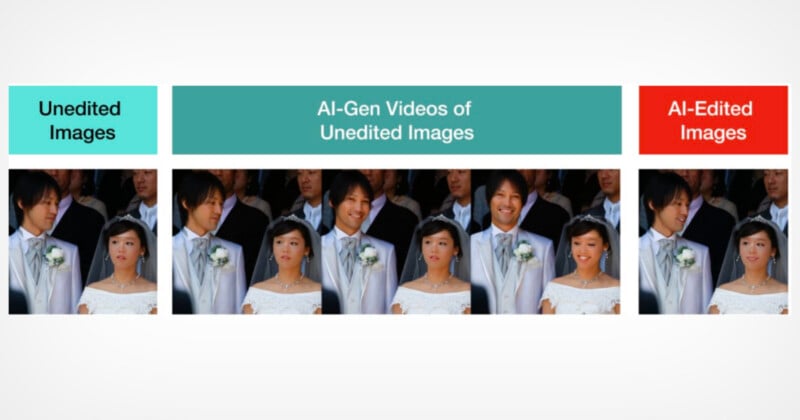
PetaPixel reported on 19 October on a study published by MIT Media Lab researchers at CHI in April 2025. In a preregistered experiment involving 200 participants, viewers first saw ordinary photographs and were then shown original, AI-edited or AI-animated versions. Participants exposed to altered media made more false recollections; the group shown AI-generated videos based on edited photographs had 2.05 times as many false memories as the control group and higher confidence in incorrect answers. This is renewed reporting on older research, not a new October 2026 experiment, and it does not prove every edit produces the same effect.
Why visual creators should care
For documentary, editorial, archival and family photography, a plausible-looking AI alteration can affect what viewers believe they saw. That is distinct from the copyright question and reinforces the need to label reconstructions and preserve originals.
Practical takeaway
Keep the original capture and mark generative reconstructions as such, especially in journalism, evidence, archives and educational material. Avoid presenting generated detail as something the camera recorded.
What to watch next
Watch for replication in real-world news and social-media settings, and for standards on identifying animated archival photographs.
Sources
Actor publicly refuses unauthorised AI image and video likenesses
In a social-media statement reported by The Times of India on 17 October, actor Neha Sharma demanded that people stop creating and sharing AI-generated images or videos using her face without consent, remove existing material and cease impersonation. She threatened legal action against those responsible. The reporting establishes her public objection, not that a lawsuit has been filed or a court has issued a takedown order.
Why visual creators should care
Performers and portrait subjects are asserting control over synthetic depictions separately from any copyright held by a photographer or producer. Commercial image licences do not automatically authorise new facial performances, fabricated endorsements or AI-generated video.
Practical takeaway
For campaigns and film, obtain written permission that specifically covers synthetic likeness and performance, with agreed limits on duration, context, alterations and onward sharing. Record approval of each final use.
What to watch next
Watch whether Sharma files proceedings, obtains platform removals or identifies particular services involved.
Sources
Pixieset’s on-device AI photo editor puts file handling back into the workflow conversation
A sponsored PetaPixel feature dated 15 October describes Pixieset’s Photo Editor as a way for photographers to cull, batch-edit and deliver images in a connected studio workflow, including AI-assisted processing described as running on-device. Because the report is sponsored and describes a vendor product, its claims about processing and efficiency should be checked against product documentation and real project tests. The feature is a professional workflow development, not a change in image copyright or client-upload permissions.
Why visual creators should care
Photographers increasingly choose tools not only by output quality but also by whether client portraits, proofs and RAW files must leave their machines. On-device processing could reduce some transfer risks, but delivery and syncing may still involve cloud services.
Practical takeaway
Test the editor on non-confidential images and verify which AI operations run locally, which files sync to Pixieset, what metadata survives export and what the service’s retention and training terms permit. Keep independent RAW backups.
What to watch next
Watch independent workflow testing, documented data-processing details and how the editor handles generated edits and Content Credentials.
Sources