Meta postpones disputed commercial terms until 20 November after publisher objections
On 23 October, Meta said its revised Commercial Terms and Self-Serve Ad Terms would take effect on 20 November 2026 instead of 30 October. Publishers and digital advertisers had complained to EU and UK competition authorities that the proposed terms might grant Meta broad rights over content associated with business users for AI services. Meta disputes that interpretation and says it will explain its crawler practices and the role of robots.txt preferences. The European Commission welcomed the postponement. No regulator has ruled that the terms are unlawful, and the delay does not itself settle what Meta may use.
Why visual creators should care
Photographers, picture libraries, agencies and publishers often maintain business pages, ads and websites holding images licensed under different agreements. A platform contract should not be assumed to expand a client’s or publisher’s authority to license a contributor’s images for AI use. This is a material new development after the 22–23 October complaint coverage.
Practical takeaway
Save the current and proposed terms with dates; identify which Meta business products the studio actually uses. Check who owns and can sublicense the images on linked websites. Record any rights reservations and crawler settings, but do not treat robots.txt as a guarantee of legal protection.
What to watch next
Watch the revised terms and clarifications before 20 November, any regulatory interim measures, and whether contributor-level image rights are addressed explicitly.
Sources
Canva launches Craft, an image generator built around editable design layouts
On 22 October, Canva introduced Craft, its first image foundation model developed by Canva Research. The company says it trained Craft with an emphasis on millions of human-designed templates in its content library rather than principally on photographs. The system first plans a composition—including placement, scale, hierarchy and text—then renders an image up to 2K, supporting more than 30 aspect ratios. Canva says it can convert outputs into editable elements with Magic Layers and that Craft is available through Dream Lab and its public API. Its performance rankings and training description are company claims, not a public audit of dataset permissions.
Why visual creators should care
This moves generative AI closer to the production of finished advertising layouts, social assets, posters and product imagery, rather than just flat pictures. For freelance designers and agencies, editable output and the provenance of training templates both matter when assessing what is original, licensed or deliverable to a client.
Practical takeaway
Test the model on a non-confidential design first. Keep a record of supplied brand assets, references, prompts, revisions and the final layered file. Check current Canva terms, licensing and client disclosure obligations before promising exclusive rights or using third-party brand materials.
What to watch next
Watch Canva’s published usage and licensing terms, any further disclosure of template-training permissions, and whether Magic Layers preserves a useful record of human edits.
Sources
China’s AI-produced feature reaches cinemas, but advance sales are weak
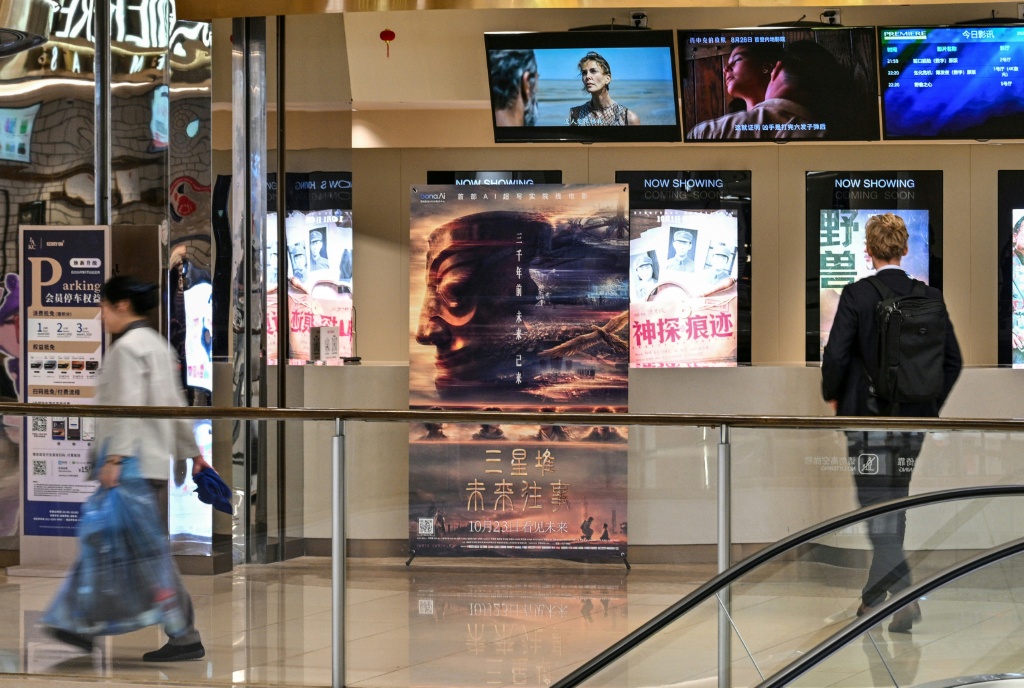
Sanxingdui: Future Past opened in Chinese cinemas on 23 October with more than 10,000 screenings scheduled, AFP reported. The production company Bona Film Group says nearly 100 people worked for more than two years on the roughly 100-minute science-fiction film, at a cost above 10 million yuan. Actors, voices and backgrounds were generated with AI, while the company describes the work as human-led in concept and artistic decisions. AFP reported 80,000 yuan in advance ticket revenue by Friday morning and a forecast below 150,000 yuan in total box office at that point; these are early figures, not final receipts.
Why visual creators should care
A theatrical release tests whether a synthetic film can sustain consistent characters, direction, editing and audience interest across a full feature. The human production effort also complicates the claim that AI filmmaking consists only of writing a prompt. The project reportedly uses original digital characters rather than replicas of identifiable actors.
Practical takeaway
For hybrid film pitches, separate claims about generated visuals from the human work of script, direction, shot selection, edit, sound and finishing. Record character origins, reference licences, performer permissions if applicable, and the tool and version history. Do not use early presales as a final box-office result.
What to watch next
Watch final receipts, audience reaction, credits, any disclosure of production rights and whether future AI features receive comparable theatrical distribution.
Sources
Spanish synthetic campaign video draws a complaint over copied faces and voices
On 23 October, Spanish outlet El País reported that former Socialist party member Leire Díez filed a criminal complaint against the opposition People’s Party over an AI-generated campaign video using her likeness and voice to imply serious wrongdoing. She requested removal and alleged defamation, harm to moral integrity and digital identity impersonation. The video also depicts other political figures; it carries a small AI label and the party describes it as satire. Lawyers quoted by El País said political expression and parody protections could make a criminal case difficult. A complaint is not a court ruling or a finding that the video is illegal.
Why visual creators should care
For visual producers, a synthetic face, fabricated speech and a disclosure label raise separate legal and ethical questions. The existence of an AI label does not itself document a subject’s consent, while parody and political expression can have special protections that differ from commercial advertising.
Practical takeaway
For commissioned synthetic performances, obtain approval for the depicted person, dialogue and context before release unless a defensible exception applies. Save the script, source materials, generation and edit history, disclosures, approvals and publication record.
What to watch next
Watch whether the court accepts the complaint, any interim removal order and judicial reasoning about satire, misleading speech and digital likeness.
Sources
Mississippi attorney general warns campaign over allegedly unlawful synthetic election ads
On 23 October, Mississippi attorney general Lynn Fitch announced that her office had notified Scott Colom’s US Senate campaign that two AI-generated social adverts appeared to violate the state’s election-deepfake law. The statement says a complaint alleged the adverts depicted Senator Cindy Hyde-Smith without consent within 90 days of an election and were intended to influence the vote or damage her reputation. The attorney general requested removal, warned that an injunction might be sought and asked the campaign to preserve records. This is an enforcement warning and allegation, not a court finding that the ads violate the law.
Why visual creators should care
The same synthetic likeness can have different consequences depending on whether it appears in a political ad, commercial endorsement, satire or editorial work. Here the immediate operational issue is preserving the generation and publication record while a regulator assesses consent, timing and intent.
Practical takeaway
Before producing an advert with a recognisable synthetic person, check local rules on timing, disclosures, consent and exceptions. Preserve dated versions, scripts, source images, approvals, placement records and correspondence in case a complaint arises.
What to watch next
Watch for a response from the campaign, withdrawal or amendment of the adverts, and whether the attorney general seeks an injunction or a court rules on the claims.
Sources
Researchers question whether AI’s supposed dilution of creative markets is proven
A 23 October UC Berkeley Haas research summary examines a policy article by Pamela Samuelson, Abhishek Nagaraj and Christopher Jon Sprigman published in Science on 15 October. The authors argue that “market dilution”—the idea that large volumes of AI-made work displace human creative work even without copying protected expression—needs a clearer definition and stronger empirical evidence before it reshapes fair-use doctrine. They discuss a photo marketplace study reporting a 47% increase in artists posting after AI imagery was allowed, alongside a 29% decline in artists posting non-AI photographs. The researchers caution that many AI contributors were already established creators, making simple displacement narratives unreliable. This is an academic argument, not a new court decision.
Why visual creators should care
Photographers, stock contributors and illustrators need credible evidence about the effect of synthetic imagery on fees, demand and licensing—not just volume counts. The research also distinguishes conventional copying or substitution of a particular work from broader competition between categories of work.
Practical takeaway
Track commissions, licence rates, buyer requests and stock sales before drawing conclusions about AI competition. When discussing market harm, distinguish direct reuse of a protected image from the more general arrival of new competing images.
What to watch next
Watch follow-up empirical studies using creator-level data, fair-use rulings that address market dilution, and any licensing proposals responding to demonstrated harms.
Sources
Glasgow AI short-film event makes production disclosure part of its programme
AI Glasgow Filmstock scheduled its 2026 edition for 23 October at The Pyramid in Glasgow, presenting a programme of 14 curated shorts made wholly or partly with AI. The organiser’s site lists winners including Opening Frames: A Cinematographer’s Diary for Best AI Documentary Short and Désirée for Best AI Short Film. Its submission rules ask filmmakers to describe which tools and production stages used AI and which decisions remained with people. This is a festival programme and its stated requirements, not a copyright ruling or universal industry standard.
Why visual creators should care
For directors, cinematographers and editors, a public screening is another place where the production method needs to be explained. The event provides a practical example of hybrid and fully generated films being presented together while preserving a distinction between machine output and human creative direction.
Practical takeaway
For festival submissions, retain an accurate tools-and-workflow note, source-media and likeness permissions, music and footage licences, human credits and an archive of the submitted cut. Read the festival’s screening and promotional licence before submitting.
What to watch next
Watch whether the organisers publish fuller production breakdowns and whether future film festivals converge on common disclosure or provenance requirements.
Sources