Neighbours archive recut prompts cast questions about consent and compensation
On 25 October, Guardian Australia reported objections from former Neighbours actors to a project using AI-assisted editing to repurpose existing episodes into short vertical videos for phones. RoseBerry Media and producer Fremantle are working with original footage; the initial cut centres on two storylines involving Margot Robbie’s Donna Freedman. Actor Matthew Werkmeister said he had not been consulted about the new use, and the actors’ union MEAA is assisting cast members. Fremantle says its RedSnapper workflow analyses, edits and reframes previously broadcast material with human review and does not generate new scenes, faces, voices or performances. The dispute concerns reuse, context, consent and remuneration; it is not evidence of fabricated actor performances.
Why visual creators should care
Editors, cinematographers, production companies and performers increasingly face new products assembled from footage shot under old contracts. An AI-assisted reformat is different from a synthetic deepfake, but it can still create difficult questions about scope of licence, distribution formats, editorial context and residuals.
Practical takeaway
Before using archived footage to create AI-assisted vertical edits, review performer, writer, footage and music contracts for repackaging and new distribution; log the exact source scenes, transformations, human approvals and any additional clearances.
What to watch next
Watch MEAA and Australian Writers’ Guild discussions with Fremantle, cast notifications, residual arrangements and the eventual release of the mobile episodes.
Sources
Brands say Meta’s automated AI edits have changed live advertising without approval
In reporting circulated 22–23 October, Adweek described complaints from Bookshop.org and agencies about Meta advertising tools adding generated illustrations, image carousels, links or translated copy to existing campaigns. Bookshop.org said an account update opted it into a generative feature that altered a human-made ad; agency Exverus reported removing live creative after unwanted changes. Meta says individual Advantage+ enhancements can be disabled. Adweek also analysed proposed responsibility language in revised business terms. Crucially, on 23 October Meta postponed the new commercial terms from 30 October to 20 November amid broader publisher objections. The reported unwanted edits are a distinct operational issue; the delayed terms should not be described as already effective.
Why visual creators should care
A commissioned photograph or designed ad can change after delivery through platform automation, potentially exceeding the client’s approved creative, misrepresenting a product or introducing new generated content. This affects agency sign-off and responsibility as much as training rights.
Practical takeaway
Audit Advantage+ creative settings per campaign, check all collapsed options and published variants, save screenshots of the actual live ad and require final approval for any platform-generated version. Review the revised terms against their now-postponed 20 November start.
What to watch next
Watch Meta’s clarifications, the 20 November effective date, opt-in behaviour and whether the platform offers a reliable audit trail for automated image changes.
Sources
Cuttable expands AI ad production built from a brand’s existing photographs and footage
In a company announcement dated 22 October (23 October in Melbourne), Australian advertising technology company Cuttable said it had relaunched an AI platform that uses a brand’s existing photography, video, catalogue and performance data to produce new ads for Meta and TikTok. The company announced an A$20 million Series A round and says more than 440 ecommerce brands use its service. Adweek reports that its workflow uses human approval before publishing and records the messaging tested by each variant. Funding and user figures are company claims, not independent assessments of creative quality or rights clearance.
Why visual creators should care
For commercial photographers and production agencies, this is a concrete example of a licensed photo or video asset becoming reusable input for many derivative ads. The rights granted for an original campaign may not clearly cover AI-generated variations, future promotions or onward uploads to third-party services.
Practical takeaway
In client agreements, distinguish delivery of final ads from permission to generate additional campaigns using the source photography. Specify permitted tools, duration, derivative rights, brand/subject approvals and who checks new output before publication.
What to watch next
Watch whether Cuttable publishes detailed asset-use, training, retention and sublicensing terms, and how its approval logs are exposed to agencies and rights holders.
Sources
UK visual-rights organisations call for creator payments alongside AI expansion
On 25 October, leaders of four UK creator-rights organisations wrote to the Guardian arguing that AI companies should pay for creators’ work used in their systems. Their letter also urges the UK government to introduce a proposed Smart Fund, a separate private-copying levy on devices used to store and copy creative material. Signatories include the Design and Artists Copyright Society (DACS) and PICSEL, making the intervention directly relevant to visual artists and image licensing. The authors estimate the fund could raise up to £300 million annually; that is an advocacy projection, not an enacted scheme or guaranteed revenue. Their reported median earnings figures likewise come from cited surveys, not a new official 2026 wage study.
Why visual creators should care
Photographers, illustrators and visual artists are asking how economic value created from their work should be shared. AI training licences and a private-copying levy are different legal mechanisms; merging them obscures what creators would actually be paid for.
Practical takeaway
Track collective-licensing initiatives and any proposed UK legislation, but do not treat the Smart Fund as money already owed. For individual commercial work, continue negotiating explicit AI training and derivative-use permissions and fees.
What to watch next
Watch whether ministers respond to the Smart Fund proposal or publish concrete AI training licensing proposals affecting image rights.
Sources
Magnific One puts reference images and brand direction into generative production
Magnific’s own 11 October product explanation describes Magnific One, launched 8 October, as an image generator with a built-in art-direction layer and an optional Brand Kit. The kit can take a website, PDF and up to 50 reference images to guide palette, type, imagery and tone across a team’s output. The product supports exploring multiple draft directions and finalising images at up to 4K. The company cites its own blind preference test, which should not be treated as independent benchmarking. This is an earlier, previously uncovered workflow development, not a new 26 October release.
Why visual creators should care
Reference photographs, client style guides, mood boards and brand assets are increasingly becoming direct inputs to generative design. Agencies need clarity about who may upload those assets, what they authorise the service to do, and how reference use is recorded.
Practical takeaway
Before importing a client’s brand book or licensed imagery, check the tool’s current terms for retention, training and commercial use. Keep a record of uploaded references, project-specific approvals, model/version, outputs and any protected assets reproduced.
What to watch next
Watch enterprise terms, reference-data controls, asset provenance support and whether the brand-consistency claims hold across real production teams.
Sources
F1’s seemingly impossible camera moves raise a disclosure question, not proof of AI use
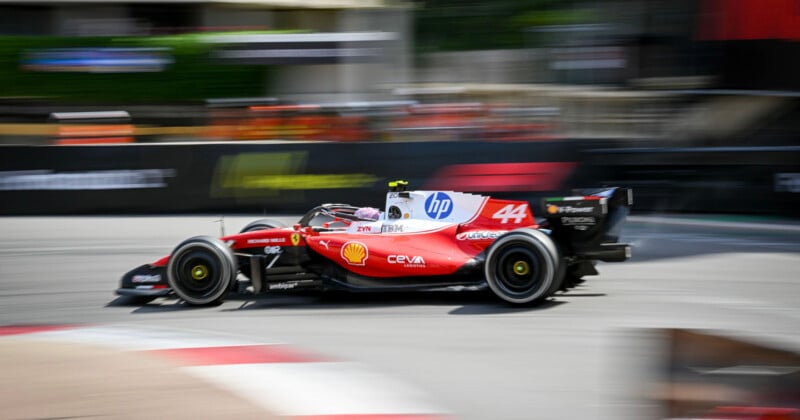
PetaPixel reported on 23 October that Formula 1 fans and a digital creator suspect some seamless race-broadcast camera transitions are generated between real shots. The examples include an 11 October pit-stop clip in which the viewpoint seems to move from a trackside camera to above a racing car. Commentator Matt Amys offered a possible AI-interpolation workflow, but PetaPixel said Formula 1 had not responded to its request for clarification. The report therefore does not verify whether generative AI was used, which production tools were involved, or whether any race action was synthetic. The newsworthy issue is the demand for an accurate explanation of the technique.
Why visual creators should care
For sports, documentary and branded-video producers, a generated transition can alter the viewer’s impression of what a camera actually captured even when the underlying action is real. Suspicion based on an unusual shot is not reliable proof of AI use.
Practical takeaway
If using synthetic transitions between real takes, record the two source shots and generated frames, identify the edit in the production log and agree disclosure requirements with the client or broadcaster. Avoid asserting that a particular broadcaster used AI without confirmation.
What to watch next
Watch for a technical explanation or confirmation from Formula 1 or its broadcast partners, and for broadcaster policies distinguishing generated transitions from actual camera footage.
Sources