An AI-made image of a nuclear explosion enters an election campaign
On 25 October, The Jerusalem Post reported that Israeli prime minister Benjamin Netanyahu shared an AI-generated image of a nuclear explosion over what appeared to be Tel Aviv, alongside a warning about Iran, two days before Israel’s 27 October election. Opposition politicians criticised the use of the image. The report identifies the scene as synthetic; it does not establish that the picture depicted an actual attack. The article says the original post did not explicitly identify the pictured city.
Why visual creators should care
A synthetic image of a disaster can be used as political illustration, but its photorealism may also imply documentary evidence if context and labelling are unclear. Editors, agencies and image makers should distinguish visualised possibilities from recorded events.
Practical takeaway
For public-interest campaigns, label imagined scenes clearly and near the image, preserve the original generation brief and approval trail, and avoid photo captions or layouts that imply an event occurred when it did not.
What to watch next
Watch for any platform label, campaign clarification or official election-ad guidance concerning the image; do not infer a legal violation solely from its synthetic origin.
Sources
Romain Gavras confronts AI copies of his meticulously choreographed film
In a 20 October report, director Romain Gavras described AI-generated versions of Storm, the Yung Lean and Gener8ion film made with extensive casting, rehearsals and a roughly 15-take 16-mm shoot. The imitations replace the original performers with unrelated subjects. Gavras said he was exploring legal avenues and had declined offers from AI companies to license the film. His remarks are a creator’s account of the dispute, not a court finding of infringement.
Why visual creators should care
A recognisable shot, camera movement or choreography can become the template for synthetic variations without reproducing every original pixel. For directors and production crews, that raises distinct questions about protectable expression, reuse, attribution and compensation.
Practical takeaway
Keep dated treatments, storyboards, choreography records, releases, raw takes and credits. When licensing a finished film, specify whether it may be uploaded as an AI reference, re-performed synthetically or used to generate variations.
What to watch next
Watch for a formal complaint, licensing agreement or platform response. The legality of any particular imitation will depend on its facts and jurisdiction.
Sources
Grok Imagine releases a seven-minute Odyssey episode, not a feature film
On 23 October, the Grok Imagine account published a seven-minute video described as episode one of an Odyssey series, crediting a collaboration with Wonder Studios X and director Dev Walker. PetaPixel reported the release on 26 October after Elon Musk had talked about remaking The Odyssey with AI. The released work is a short episode, not the promised feature-length production; critical reaction reported by PetaPixel was mixed to negative.
Why visual creators should care
The example shows that generative video can involve a credited director and production collaborators while still being judged on storytelling, character differentiation and execution. An AI model alone does not explain the finished creative process.
Practical takeaway
For AI-assisted film commissions, credit human direction and postproduction, log source references and model versions, and distinguish promotional ambitions from what has actually been completed and delivered.
What to watch next
Watch for a full making-of breakdown, further episodes and any published information about licensed inputs or production assets.
Sources
AI companies still commission human designers for their own identities
Creative Bloq reported on 25 October that AI businesses have been commissioning human-led branding projects. Its examples include How&How’s work for image generator Ideogram, Lazarev’s identity for video tool Elva, Together’s design for Clusia, and Meta commissioning lettering artist Jessica Hische for Muse. The Ideogram identity combines generated imagery with hand refinement in Photoshop. The piece is industry commentary supported by named examples, not a labour-market study.
Why visual creators should care
AI image tools can generate options quickly, but branding also involves positioning, trust, typography, systems and accountability. These commissions are concrete examples of continued professional human design work within the AI sector itself.
Practical takeaway
When pitching brand identity work, define the value of research, original lettering, art direction, brand governance and asset rights separately from the cost of producing image variations. Record generated elements and any third-party references.
What to watch next
Watch whether AI vendors disclose their production processes and credit the designers and studios who build their brands.
Sources
World Cup referee footage shows AI processing is not necessarily synthetic footage
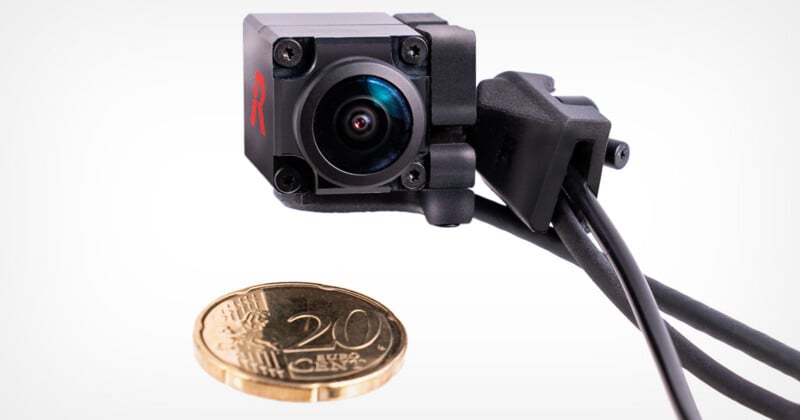
PetaPixel reported on 26 October that the 14-gram Riedel RefCam used by the referee at the 2026 World Cup final has been added to the Deutsches Museum collection. Its report, citing CineD, says FIFA and Lenovo used AI-based stabilisation to smooth footage from the real camera before broadcast. The AI claim concerns stabilisation of captured video, not the generation of a fictional camera position or invented sporting action.
Why visual creators should care
A broadcaster can apply machine-learning processing to actual footage without manufacturing the scene. The distinction matters when audiences, clients or competitors assume that every AI-assisted shot contains synthetic pixels or invented events.
Practical takeaway
Keep a technical log of camera capture, stabilisation, interpolation and any generative steps as separate categories. For documentary or sports work, do not describe an AI-stabilised shot as synthetic without evidence.
What to watch next
Watch for technical documentation from FIFA, Lenovo or Riedel on the stabilisation pipeline and any guidance on disclosure in live sport.
Sources
Apple’s sensor-signed Reference Image and C2PA answer different provenance questions
A detailed 12 October PetaPixel comparison, supported by Apple’s earlier technical account, explains that Apple Reference Image signs capture information at the iPhone 18 Pro main sensor and verifies it through Apple’s infrastructure, whereas C2PA Content Credentials are an interoperable system for signed records about media and editing history. Apple’s opt-in capture method is currently limited to supported Apple hardware and services. Neither approach can prove that every uncredentialed image is synthetic, nor do they establish the truth of a photograph’s caption or context.
Why visual creators should care
Photojournalists may need evidence of physical capture, while commercial editors and agencies need a record of subsequent changes. Sensor attestation and an edit history address related but different parts of image trust.
Practical takeaway
Keep original camera files and signed reference material where supported; preserve C2PA credentials through compatible editing and delivery steps. Explain to clients what a credential actually proves and where the chain may be lost.
What to watch next
Watch developer integration, third-party verification, compatibility between approaches and uptake by cameras and publishing platforms. This is earlier October context, not a 27 October product launch.
Sources