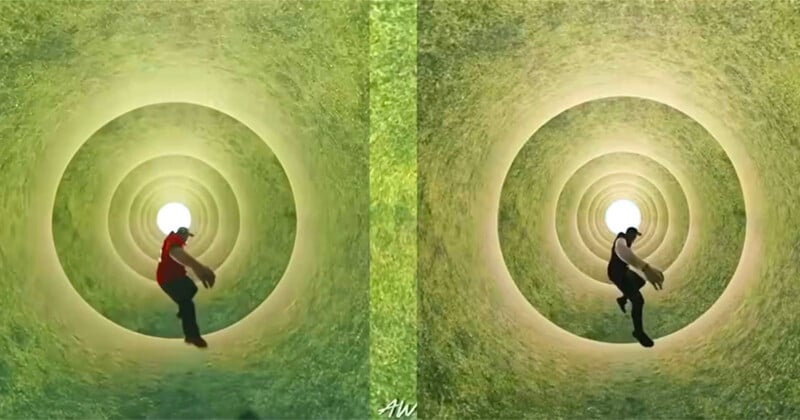
Video artists say an ASAP Rocky music-video shot closely copies their 2019 footage
PetaPixel reported on 27 October that creative director and VFX artist Cache Bunny, video artist Ari Fararooy and parkour athlete Jason Paul have questioned a roughly six-second sequence in ASAP Rocky’s “Shroom Clouds” music video. The disputed sequence resembles footage they made in 2019 using a 360-degree camera and subsequent visual effects. The new video credits AI artists, but the report does not establish which technical method produced the contested sequence, whether any source clip was licensed, or whether copyright infringement occurred. The creators are considering their options.
Why visual creators should care
A short segment can involve protected cinematography, footage, editing and effects, even if it is later processed through an AI workflow. The legal question is not settled by the presence of AI credits or by visual resemblance alone; source access, actual copying, licence scope and protectable expression matter.
Practical takeaway
For music videos, campaigns and AI-assisted composites, maintain a source-footage register and obtain explicit clearance before reusing an identifiable clip. Keep side-by-side source comparisons and dated creative records if a dispute arises.
What to watch next
Watch for statements from the director, label or production company, documentation of the source workflow, a licence confirmation, or any formal claim. No court finding is reported.
Sources
Google’s Genie 4 lets filmmakers steer synthetic scenes in real time
Google DeepMind announced Genie 4 on 27 October as a research-preview world model capable of photorealistic interactive scenes with native sound. Users can steer a scene through natural-language instructions, including camera movement, weather and characters. Google says trusted testers are exploring previsualisation and even turning archival photographs into explorable simulations. The company says all generated video and audio carry SynthID, and cautions that details, object permanence and spatial accuracy can drift. The preview is not yet a general public release.
Why visual creators should care
This goes beyond generating a static image: a reference photo or prompt can become a navigable scene. For documentary and commercial productions, such outputs are simulations, not original photographic records of the pictured location or event.
Practical takeaway
Keep the original reference photo, prompt and intended use; label simulated archival or documentary scenes as reconstructions; record approvals for any identifiable people, locations or copyrighted references.
What to watch next
Watch for public availability, professional production integrations, clearer source and likeness controls, and independent tests of SynthID persistence through editing and export.
Sources
Apple adds Generate Fill to Pixelmator Pro and links it directly with Final Cut Pro
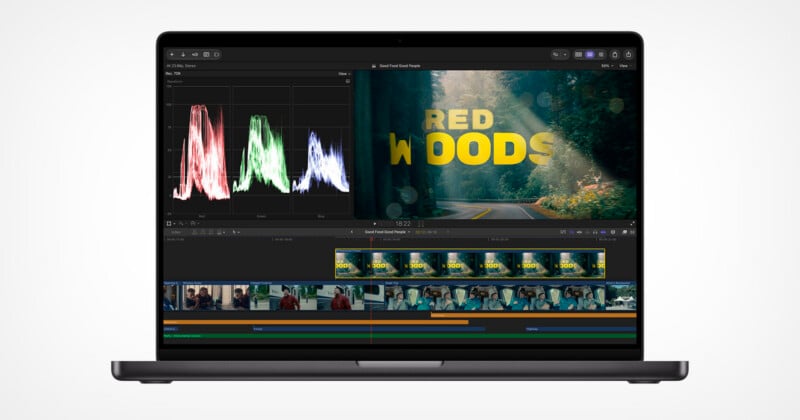
Apple announced on 27 October that Pixelmator Pro will gain Generate Fill, allowing users to select part of an image and describe a replacement or alteration in natural language. Apple says generated elements can be inserted as separate layers with masks and adjusted for surrounding lighting, perspective and texture. Final Cut Pro gains direct round-tripping with Pixelmator Pro, alongside integrated MotionVFX and a stock-content hub. Apple says the updates will arrive in November for Creator Studio subscribers; they are not yet available as of 28 October.
Why visual creators should care
Generated pixels can now enter a commissioned video or photograph without leaving the editing environment. The resulting file may be a mixture of photographed and synthetic content, with different disclosure and client-approval expectations.
Practical takeaway
Preserve untouched originals, label material generative replacements in the project log, retain layered working files and confirm whether the client permits synthetic changes or stock assets.
What to watch next
Watch the November release, the feature’s output provenance and credit terms, and how Apple distinguishes generated imagery from licensed Content Hub assets in exports.
Sources
Google clarifies when connected Google Photos content can influence advertising
PetaPixel reported on 27 October that Google updated its privacy-policy wording effective 16 October. Google’s published policy says content from Google Photos, Drive and Gmail is not ordinarily used to personalise ads, but an exception can apply when a user chooses to make data from those services available to another Google service that supports personalised advertising. Google says the exception depends on settings and does not give advertisers direct access to users’ private files. This is not a blanket change authorising ad targeting from every Google Photos library, nor is it a claim that Google trains image-generation models on all private photos.
Why visual creators should care
Photographers and agencies may store client portraits, unreleased campaigns or private reference photographs in connected services. Permissions for personalisation and advertising use are distinct from copyright ownership and from AI model-training permissions.
Practical takeaway
Audit connected-app permissions and personalisation settings on accounts used for client work. Avoid connecting confidential client libraries to consumer AI features without an appropriate data-processing review.
What to watch next
Watch for further Google explanations of the scope of connected data, account controls and differences between consumer and enterprise accounts.
Sources
A visual artist argues that AI-generated art can still involve human authorship and craft
In a 27 October opinion article in The Art Newspaper, French-Turkish visual artist and curator Sarp Kerem Yavuz responded to Pope Leo XIV’s criticism of AI art. Yavuz argued that artists can use generative systems with deliberate creative control, and cited photographic and conceptual precedents involving appropriation, found material and unconventional tools. He expressly distinguished the artistic question from the separate ethics of dataset sourcing and remuneration. This is a published argument, not a court ruling or a change in copyright law.
Why visual creators should care
Visual creators often conflate artistic legitimacy, human creative contribution, copyright protection and the legality of training material. Those are different questions, even when they concern the same image.
Practical takeaway
When describing AI-assisted work to clients or galleries, document the human choices, original source materials, editing stages and permissions rather than relying on an “AI art” or “not AI art” label alone.
What to watch next
Watch for substantive responses from artists, curators and copyright authorities; do not treat aesthetic acceptance as proof of copyrightability.
Sources
Swiss federal guidance warns that AI image “tells” are unreliable and client data needs protection
In guidance published 16 October, Switzerland’s National Cyber Security Centre, working with the Federal Data Protection and Information Commissioner, advised organisations to avoid uploading confidential or personal information to AI tools without appropriate safeguards. Its image-authenticity section says the old “count the fingers” approach is no longer reliable, and recommends checking multiple clues and the source. It also says Swiss data-protection law applies to AI processing and describes human authorship as central to Swiss copyright protection. This is earlier official guidance, not a new 28 October law.
Why visual creators should care
Commercial photographers and agencies may handle identifiable portraits, client briefs, source images and unreleased work. AI image verification and AI input handling are both practical compliance and trust issues.
Practical takeaway
Use approved enterprise tools where appropriate, check model-training controls, anonymise sensitive inputs, preserve camera originals and treat visual AI-detector clues as inconclusive without corroboration.
What to watch next
Watch the Swiss AI consultation expected in 2027 and any more specific federal guidance for photographic and visual-production workflows.
Sources